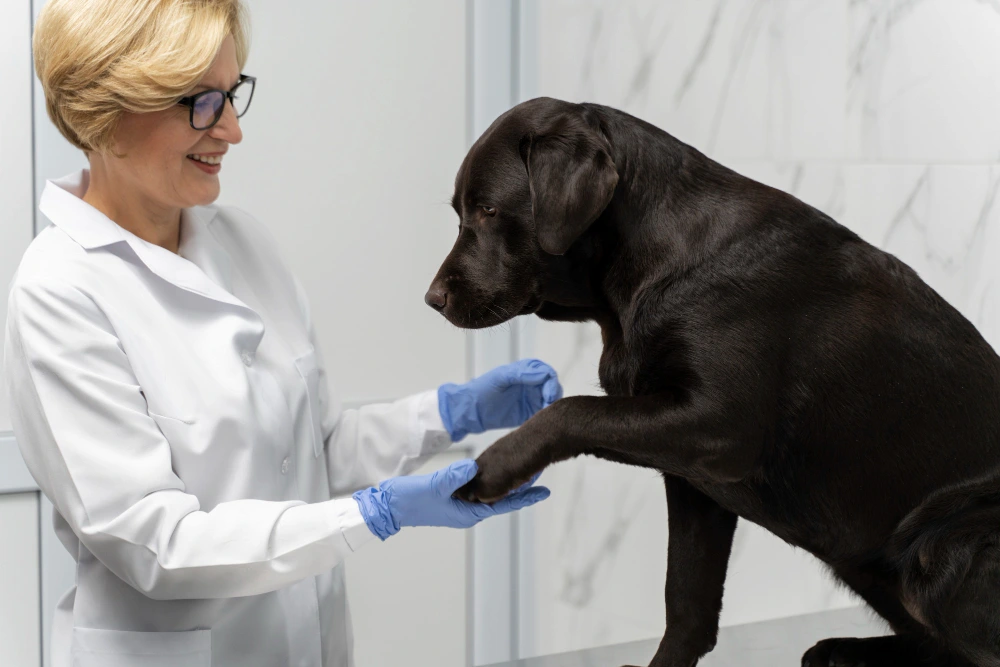
If your dog has been diagnosed with hip dysplasia, chiropractic care may help reduce discomfort, improve mobility, and support a better quality of life alongside your veterinarian’s treatment plan. Hip dysplasia is one of the most common orthopedic conditions in dogs, and while it can’t be reversed, there’s a lot that can be done to help your dog move more comfortably and stay active longer. At Axiom Animal Chiropractic in Charlotte, NC, we work with dogs dealing with hip dysplasia regularly, and the results often exceed what owners expected was still possible.
What Is Hip Dysplasia in Dogs?
Hip dysplasia is a developmental condition where the ball and socket of the hip joint don’t fit together properly. Instead of gliding smoothly, the joint grinds and rubs with movement, which causes inflammation, pain, and over time, progressive joint degeneration. It’s a structural problem that dogs are born with a predisposition toward, though environment and growth rate can influence how severely it develops.
Larger breeds are most commonly affected, including German Shepherds, Golden Retrievers, Labrador Retrievers, and Bernese Mountain Dogs. But hip dysplasia can show up in dogs of any size, and even in breeds you might not expect.
Some dogs show symptoms as young as a few months old. Others don’t show obvious signs until middle age or later, when the accumulated wear on the joint finally catches up with them.
Signs Your Dog May Have Hip Dysplasia
The symptoms of hip dysplasia can vary widely depending on the dog’s age, the severity of the malformation, and how much secondary arthritis has developed. Common signs include:
- A swaying or bunny-hopping gait in the back end
- Reluctance to run, jump, or climb stairs
- Stiffness after rest, especially in the morning
- Reduced range of motion in the hips
- Muscle loss in the hind legs or thighs
- Pain when the hips are touched or manipulated
- General slowing down or reluctance to exercise
If you’re noticing these patterns, a visit to your veterinarian for diagnosis is the right first step. Imaging is typically needed to confirm hip dysplasia and assess its severity.
How Chiropractic Care Can Help Dogs with Hip Dysplasia
Chiropractic care doesn’t change the structure of the hip joint itself. But here’s what it does address: when a dog compensates for hip pain by shifting weight forward or moving awkwardly, the spine and surrounding joints take on stress they weren’t designed to handle. Over time, this compensation pattern creates secondary problems throughout the back, pelvis, and neck.
These secondary restrictions and misalignments, called vertebral subluxations, add to the dog’s overall pain load and limit how well they can function. By correcting those subluxations, chiropractic care helps the nervous system communicate more efficiently, reduces muscle tension in the compensating areas, and takes some of the burden off an already stressed system.
Many dogs with hip dysplasia move noticeably better after chiropractic care, not because the dysplasia has changed, but because everything around it is working more freely. That can make a significant difference in day-to-day comfort and activity level.
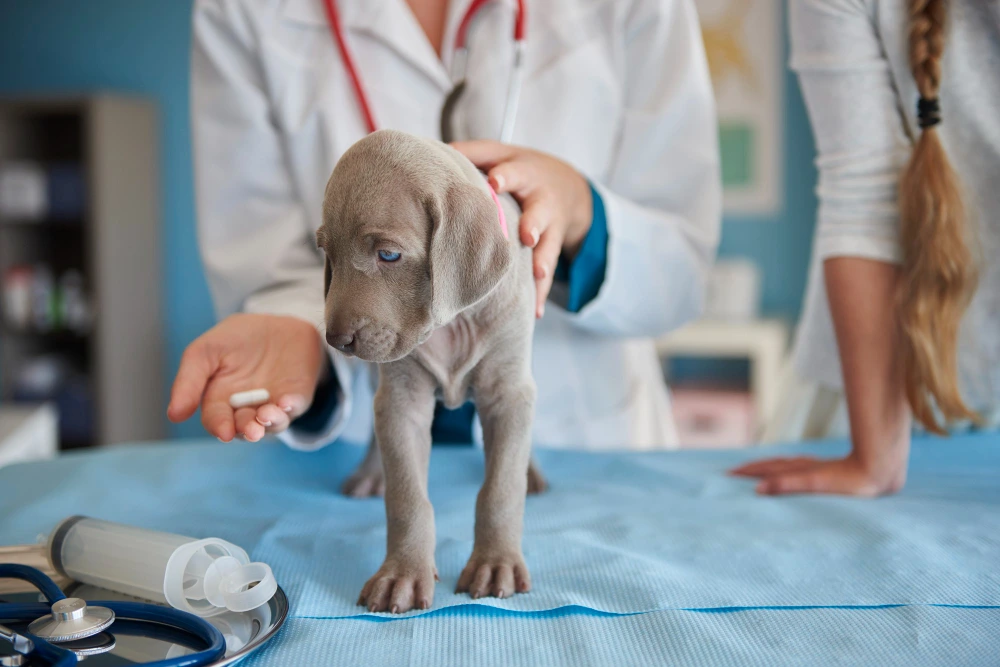
Chiropractic as Part of a Broader Hip Dysplasia Plan
Hip dysplasia is typically managed through a combination of approaches depending on severity. Your veterinarian may recommend weight management, anti-inflammatory medications, joint supplements, physical therapy, or in more serious cases, surgical options like a total hip replacement. Those recommendations are important and should drive the primary plan.
Chiropractic fits into that picture as a complementary tool. It’s not a replacement for any of those interventions. At Axiom Animal Chiropractic, we coordinate with your vet and ask that you bring your dog’s records to the first visit so we have a complete picture of their diagnosis and current treatment plan.
We’ve found that dogs with hip dysplasia who receive consistent chiropractic care alongside other management strategies often maintain their function and comfort longer than those relying on a single approach.
What a First Visit Looks Like for a Dog with Hip Dysplasia
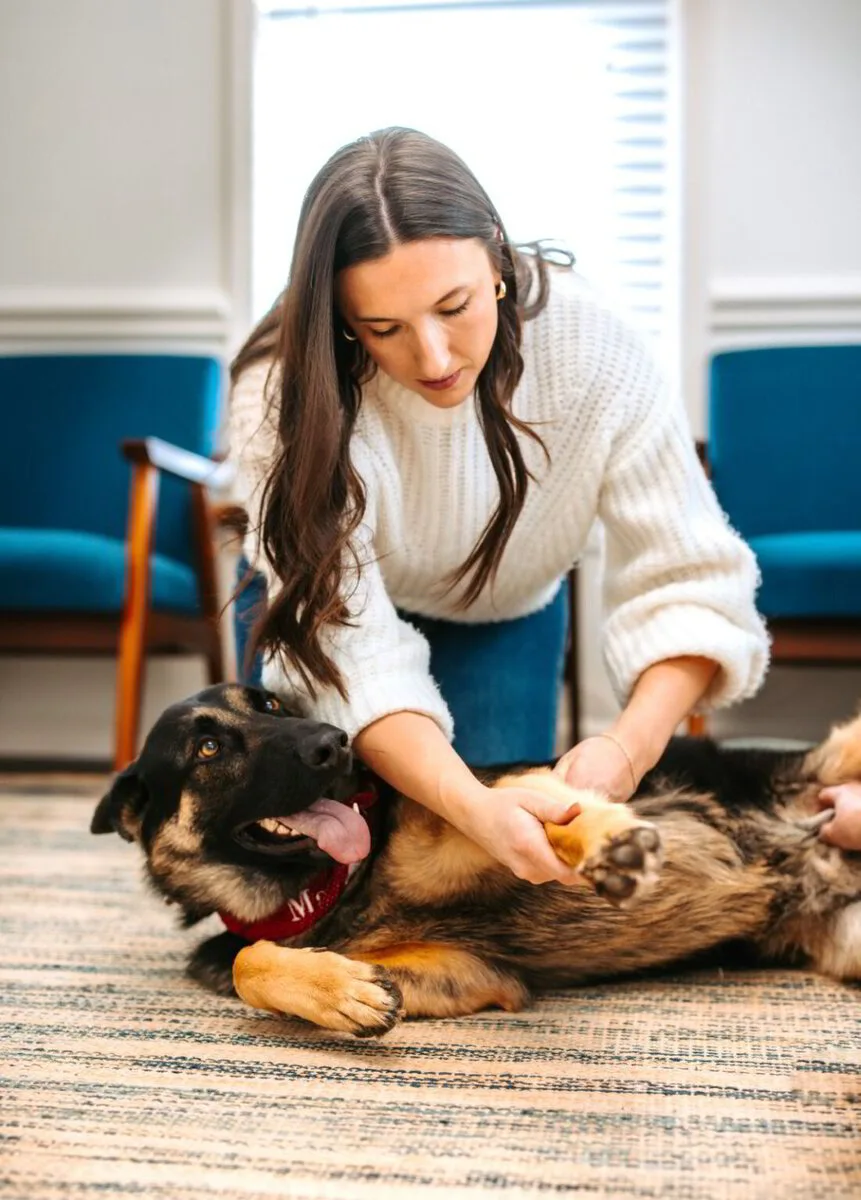
Dr. Megan will start by reviewing your dog’s health history and any imaging or notes from your veterinarian. From there, she’ll do a hands-on evaluation of your dog’s posture, gait, and how they’re distributing weight. Dogs with hip dysplasia almost always have visible compensation patterns, and identifying those helps guide where adjustments are most needed.
The adjustments themselves are gentle and adapted to your dog’s individual tolerance and physical condition. Many dogs with hip dysplasia are already in some degree of pain, so Dr. Megan works carefully and reads each dog’s cues throughout the session. Most dogs settle quickly and tolerate adjustments very well.
You’ll leave with a follow-up plan and guidance on what to watch for at home between visits.
Which Dogs Tend to Respond Best?
In our Charlotte practice, we tend to see the strongest responses in dogs whose hip dysplasia is mild to moderate, where compensatory patterns in the spine and pelvis are a significant contributor to their discomfort. Dogs with severe joint destruction may have more limited responses, though chiropractic can still help manage secondary restrictions and improve overall comfort.
Younger dogs with hip dysplasia can benefit significantly from early chiropractic care because addressing spinal compensation patterns before they become deeply established makes a real difference in how the condition progresses. We’d rather work with a dog at two years old than wait until they’re struggling at eight.
You can read about some of the outcomes we’ve seen on our testimonials page, including dogs whose owners had been told there wasn’t much more that could be done.
Serving Dogs with Hip Dysplasia Across the Charlotte Metro
Axiom Animal Chiropractic is located in Charlotte, NC, and we see dogs from throughout the greater Charlotte area, including Concord, Huntersville, Gastonia, Matthews, Indian Trail, and Waxhaw. If your dog has been diagnosed with hip dysplasia and you want to explore what chiropractic care might offer, we’d be glad to talk through your dog’s specific situation.
You can book a consultation at charlotteanimalchiropractor.com/contact or call us at (704) 469-4772. We’re here to help your dog stay comfortable and moving as well as possible for as long as possible.