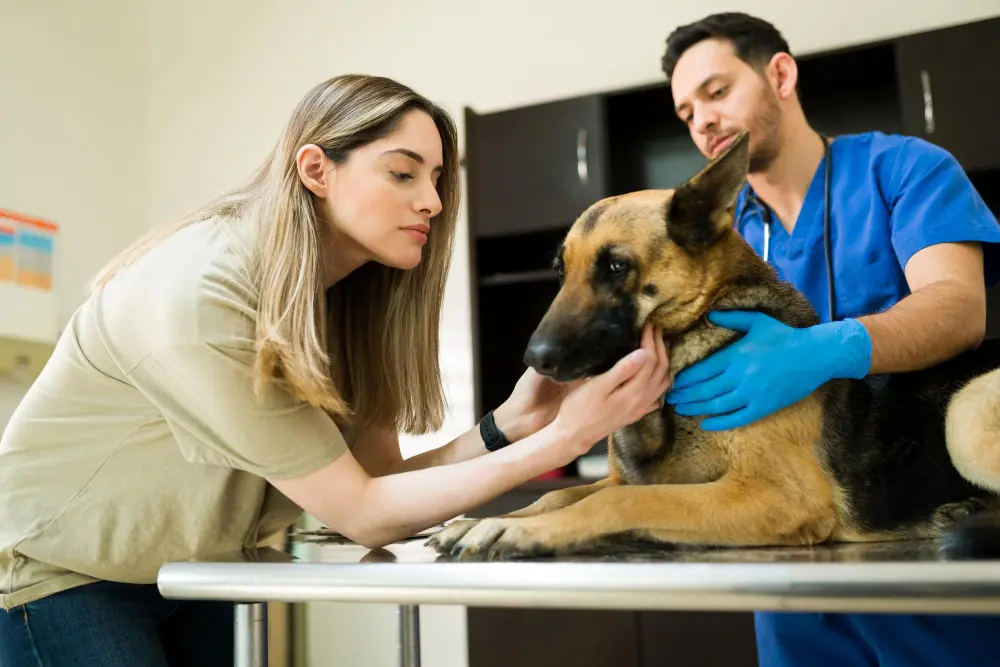
Chiropractic care can be a valuable part of a dog’s post-surgical recovery, helping to address the spinal compensation patterns that developed before and during surgery, support the nervous system’s role in healing, and help your dog return to full function more completely than they might with rest and rehabilitation alone. At Axiom Animal Chiropractic in Charlotte, NC, we work with post-surgical dogs as a complementary piece of their recovery team, always coordinating with the surgical and veterinary team to make sure our approach supports rather than interferes with the healing process.
Why Surgery Alone Doesn’t Reset the Whole Body
Orthopedic surgery fixes the structural problem it’s designed to address. A TPLO stabilizes a ruptured cruciate ligament. A femoral head ostectomy addresses a severely dysplastic hip. Spinal surgery decompresses a disc causing nerve impingement. These procedures are often necessary and life-changing for the dogs who need them.
But surgery addresses the primary problem, not what the body did to manage that problem in the months or years leading up to it. A dog who limped on a bad leg for a year before surgery developed significant compensation patterns throughout the spine. A dog who had progressive IVDD before surgical intervention has had nerve pressure affecting muscle function and movement coordination for however long the compression was present. A dog who came out of anesthesia and spent weeks in restricted crate rest has lost muscle mass and developed tension patterns from inactivity.
All of those secondary effects remain after surgery. They don’t resolve automatically just because the primary problem has been corrected. This is where chiropractic care fits naturally into the recovery plan, addressing what’s been left behind throughout the spine so the dog can fully benefit from what the surgery achieved.
Common Surgeries Where Chiropractic Supports Recovery
TPLO and Cruciate Repair
Cruciate tears are one of the most common orthopedic surgeries in dogs, and the recovery period is significant. Before the tear, most dogs were compensating for instability in the stifle by shifting weight forward or to the opposite side, which created thoracic, lumbar, and cervical restrictions. During recovery, crate rest and limited movement create additional tension patterns from inactivity. Chiropractic care during the recovery phase, once cleared by the surgical team, helps work through those restrictions and supports a more complete return to normal movement.
Hip Surgery
Dogs who have had total hip replacement or femoral head ostectomy were often managing hip dysplasia and its compensation patterns for a long time before surgery. The lumbar spine, sacrum, and contralateral hip typically carry significant restrictions by the time surgery is performed. Addressing those restrictions post-surgically helps the dog fully utilize the mechanical improvement the surgery provided.
Spinal Surgery
Dogs who have had spinal surgery for disc disease or other spinal conditions benefit from chiropractic care to address the adjacent segments of the spine that often develop compensatory restrictions around the surgical site. The segments above and below a surgical intervention are typically under increased stress, and gentle chiropractic attention to those areas, at the appropriate time in recovery, supports better overall spinal function post-surgery.
Elbow Surgery
Dogs recovering from elbow dysplasia procedures often have significant cervical and thoracic restrictions from years of front-end compensation. Once the surgical healing is underway and the team gives the green light, addressing those restrictions helps the dog fully recover the movement and comfort the surgery was intended to restore.
When to Start Chiropractic Care After Surgery
The timing depends entirely on the type of surgery and where the dog is in their recovery. For most orthopedic surgeries, chiropractic care can typically begin several weeks into recovery once the surgical site has stabilized and the veterinarian or surgeon has cleared the dog for additional hands-on work. For spinal surgeries, the timeline may be longer and requires specific clearance from the surgical team.
We never begin post-surgical chiropractic care without communicating with the dog’s veterinary and surgical team first. If you’re considering adding chiropractic to your dog’s recovery plan, the conversation to have is with your surgeon first, and then with us. We’re happy to communicate directly with your vet if that helps coordinate the approach. Learn more about Dr. Megan’s collaborative approach to care.
What Post-Surgical Chiropractic Visits Look Like
Early post-surgical visits are typically gentler and more conservative than standard chiropractic appointments. Dr. Megan works carefully around the surgical site and any areas of active healing, focusing on the regions of the spine that have been under secondary stress from compensation patterns rather than the primary surgical area.
As the dog progresses through recovery and the surgical team clears them for increasing activity, chiropractic visits can address a broader range of restrictions and work toward a more complete restoration of spinal function. The pace is always guided by the dog’s comfort and the parameters set by the surgical and veterinary team.
You’ll receive home observation guidance after every visit and regular feedback on what’s being found and how the plan is progressing. Our goal is to be a useful, communicative part of your dog’s recovery team, not an independent variable operating without context. Learn more about our approach to canine chiropractic care in Charlotte.
Serving Post-Surgical Dogs and Their Owners Across Charlotte, NC
Axiom Animal Chiropractic is located at 1726 E 7th St in Charlotte, NC. We see post-surgical dogs from throughout the Charlotte metro area, including Huntersville, Mooresville, Concord, Matthews, Indian Trail, and surrounding communities. Dr. Megan Hullihen is a Doctor of Chiropractic from Palmer College of Chiropractic with specialized animal chiropractic training and experience working with dogs in recovery from a wide range of orthopedic and spinal procedures.
If your dog has an upcoming surgery or is already in recovery and you want to explore adding chiropractic to the plan, reach out at charlotteanimalchiropractor.com/contact or call us at (704) 469-4772. We’re glad to answer questions and help you figure out where chiropractic fits in your dog’s specific situation.