
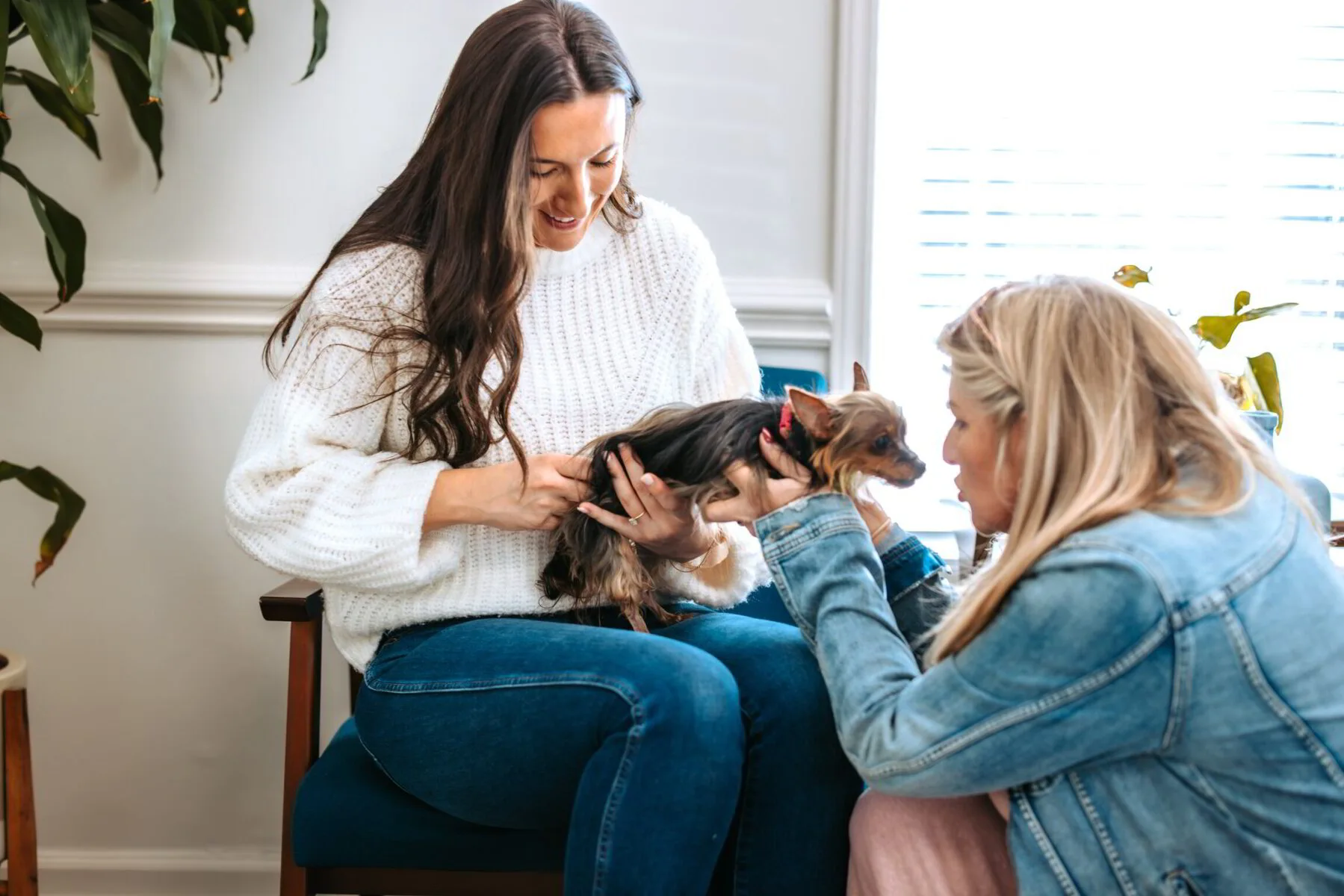
If your dog is showing signs of pain that seem to come and go, shift around the body, or don’t match an obvious injury, the source may be a pinched or irritated nerve rather than a problem with the muscle or joint itself. Nerve pain in dogs is easy to miss and often misunderstood, but it’s a common issue with a clear connection to spinal health. At Axiom Animal Chiropractic in Charlotte, NC, addressing the spinal restrictions that create nerve pressure is central to what we do, and understanding how nerve pain works helps you recognize it when it shows up.
What Causes Nerve Pain in Dogs
A dog’s nervous system runs through and branches out from the spine. The spinal cord travels through the protective canal formed by the vertebrae, and at each level, nerve roots exit between the vertebrae to carry signals to the muscles, skin, organs, and tissues throughout the body.
When a vertebra shifts out of its normal position, a condition called a vertebral subluxation, the space where the nerve root exits can narrow. That puts pressure on the nerve, irritating it and disrupting the signals it carries. The result is nerve pain, which can feel very different from the dull ache of a sore muscle or arthritic joint. Nerve pain can be sharp, shooting, burning, or tingling, and it often radiates along the path the nerve travels.
This is why a dog with a pinched nerve in the neck might show signs of pain in the shoulder or front leg, or why a dog with a lower back restriction might seem uncomfortable in the hind end or have an unusual gait. The pain shows up wherever the affected nerve travels, which isn’t always where the actual problem is.
Why Nerve Pain Is So Easy to Miss
Nerve pain in dogs often gets misread because it doesn’t behave like the pain owners expect. It can come and go. It can seem to move around the body. It can produce behavioral changes that don’t obviously look like physical pain at all.
A dog with nerve pain might suddenly yelp when they move a certain way, then seem fine moments later. They might become reluctant to be touched in a specific spot, flinch unpredictably, or develop a sensitivity that wasn’t there before. Some dogs with nerve pain become withdrawn or irritable. Others develop subtle changes in how they hold their head, neck, or back to avoid triggering the pain.
Because these signs are inconsistent and don’t point to an obvious injury, owners often struggle to figure out what’s going on, and the underlying nerve irritation can persist for a long time before it’s properly identified.
Signs Your Dog May Have Nerve Pain
Here are patterns that may point to nerve involvement rather than a straightforward muscle or joint problem:
- Sudden yelping or crying out with certain movements, then apparent normalcy
- Sensitivity or flinching when touched in a specific area, especially along the spine
- Pain that seems to shift location or come and go
- An unusual gait, dragging of a paw, or knuckling over of a foot
- Muscle twitching or trembling without an obvious cause
- Reluctance to turn the head, climb stairs, or jump
- Weakness in one or more limbs
- Behavioral changes like irritability, restlessness, or withdrawal
Some of these signs, particularly weakness, dragging a limb, or knuckling over, can indicate a more serious neurological issue that needs prompt veterinary attention. Always start with your veterinarian to rule out conditions that require medical or surgical management before pursuing chiropractic care.
How Chiropractic Addresses the Root Cause
When nerve pain is being driven by a vertebral subluxation, the most direct way to address it is to correct the misalignment creating the nerve pressure. This is exactly what chiropractic care does. Rather than simply masking the pain, the goal is to restore normal position and motion to the affected vertebrae so the nerve is no longer being compressed or irritated.
When Dr. Megan corrects the subluxation, the pressure on the nerve is relieved, the irritated nerve can begin to settle, and the muscles that tightened in response to the problem can release. For dogs whose nerve pain stems from a correctable spinal restriction, this can produce meaningful relief.
To understand more about the mechanism behind this, our guide on what a vertebral subluxation is in animals explains how spinal misalignments affect nerve function across the body. For the hands-on care itself, learn more about canine chiropractic care at Axiom Animal Chiropractic.
Chiropractic as Part of a Complete Approach
Nerve pain can have several causes, and not all of them are chiropractic cases. Disc disease, injury, infection, and other conditions can all produce nerve pain and may require veterinary diagnosis and treatment. This is why we always work alongside your veterinarian rather than in place of them.
For nerve pain that stems from or is worsened by spinal restrictions, chiropractic addresses the structural source directly. For nerve pain with a more serious underlying cause, chiropractic may still play a supportive role as part of a broader treatment plan, but only in coordination with your vet’s diagnosis and recommendations. We ask that you bring your dog’s veterinary records to the first visit so we have a complete picture.
What to Expect at a Visit
The first appointment starts with a thorough conversation about the signs you’ve noticed, when they appear, and what your veterinarian has found. Dr. Megan then evaluates posture, gait, and spinal mobility to identify where restrictions are present and which ones are likely contributing to the nerve pain.
Adjustments are gentle and adapted to your dog’s comfort, with particular care taken around areas that are already sensitive. You’ll leave with home observation guidance and a recommended follow-up plan based on what was found. Read about outcomes from dogs we’ve helped on our testimonials page.
Serving Dog Owners Across Charlotte, NC
Axiom Animal Chiropractic is located at 1726 E 7th St in Charlotte, NC. We see dogs from throughout the Charlotte metro area, including Huntersville, Mooresville, Concord, Matthews, Mint Hill, and surrounding communities. If your dog has been showing signs of pain that you can’t quite pin down, we’d be glad to evaluate whether a spinal restriction might be the cause.
Book a consultation at charlotteanimalchiropractor.com/contact or call us at (704) 469-4772.