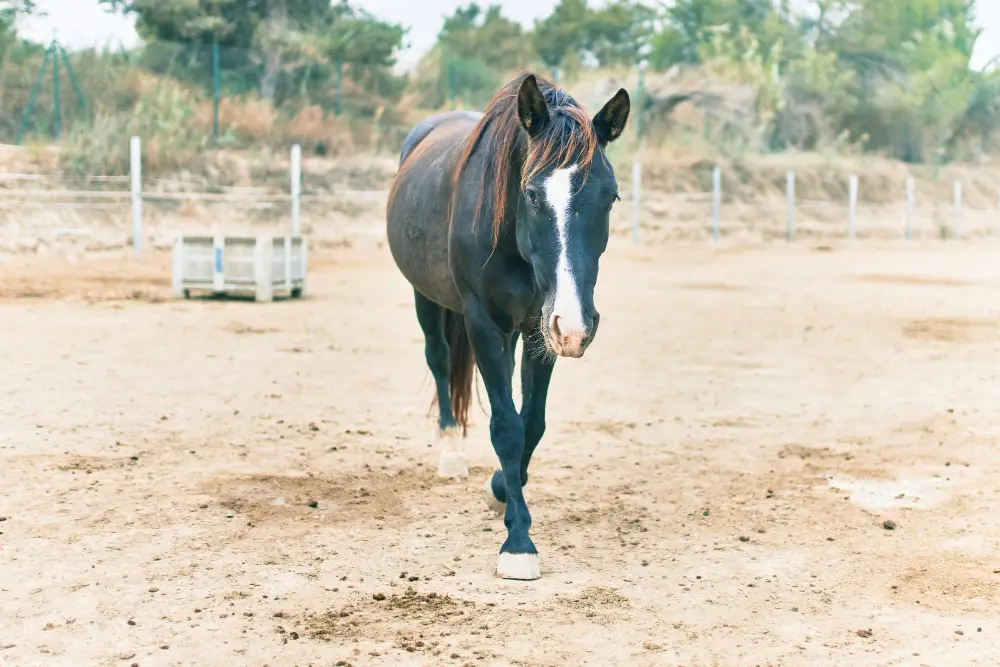
Gait asymmetry in horses, where the movement appears uneven, choppy, or unbalanced from one side to the other, often has a spinal component that chiropractic care can directly address. While lameness from hoof, joint, or soft tissue problems is always the first thing to rule out, spinal restrictions are a frequently overlooked contributor to gait irregularities that don’t resolve with standard veterinary treatment. At Axiom Animal Chiropractic in Charlotte, NC, gait asymmetry is one of the most common concerns equine owners bring to us, and the results of addressing the structural side of the problem are often significant.
What Causes Gait Asymmetry in Horses
A horse’s gait is a finely coordinated sequence of movements that depends on every part of the musculoskeletal system working together properly. When one area isn’t functioning normally, whether from pain, restriction, weakness, or compensation, the whole pattern shifts. The horse doesn’t just hurt in one spot. They reorganize how they move to protect that spot, which creates asymmetry that shows up clearly to a trained eye on the ground or under saddle.
Spinal subluxations, which are misalignments in the vertebrae that create nerve pressure and restrict normal movement through that segment, are a common underlying driver of gait asymmetry. A restriction in the thoracic spine reduces the swing through the shoulder on the affected side. A restriction in the lumbar region affects how the hindquarters engage and push through. Sacral restrictions create asymmetry in how the pelvis moves and transmits power from the hindquarters to the rest of the body.
What makes this particularly tricky is that the primary restriction and the place where asymmetry is most visible aren’t always the same. A horse who looks stiff on the left behind may have a right-sided restriction causing them to compensate. Understanding the full spinal picture is what separates a targeted chiropractic evaluation from a surface-level assessment.
Signs Your Horse’s Gait Asymmetry May Have a Spinal Component
Not every gait irregularity is a chiropractic case. Hoof imbalance, joint disease, soft tissue injuries, and dental problems can all produce gait changes that need to be addressed by your veterinarian or farrier. But these patterns in particular often suggest the spine is involved:
- Gait asymmetry that has been thoroughly evaluated for lameness without a clear structural diagnosis
- Asymmetry that appears or worsens when the horse is ridden but is less obvious on the lunge
- A horse who tracks consistently wider or narrower behind on one side
- Difficulty maintaining straightness or a tendency to drift consistently in one direction
- Uneven hoof wear that suggests asymmetric loading over time
- Resistance to lateral movement or collection that is clearly one-sided
- A horse whose gait was addressed by the farrier or vet but didn’t fully normalize
- Muscle asymmetry visible along the topline or hindquarters, particularly if it developed gradually
If your veterinarian has cleared the horse of primary lameness causes and the asymmetry persists, a chiropractic evaluation is a logical next step.
How Chiropractic Addresses Gait Asymmetry
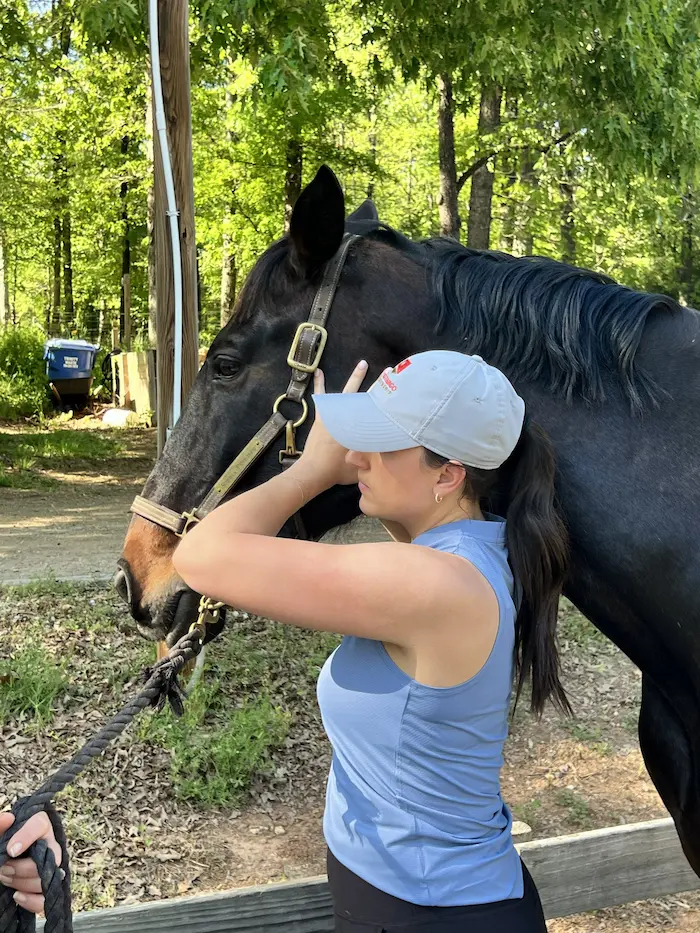
At every equine chiropractic appointment, Dr. Megan begins with a thorough movement assessment before any hands-on work. She watches the horse move on a straight line and through turns, observes how the hindquarters track, evaluates the symmetry of the shoulder swing, and notes any head bobbing, lateral drift, or irregularity in stride length or timing. This movement picture guides the spinal evaluation that follows.
The hands-on evaluation identifies where subluxations are present, how significant they are, and which ones are most likely to be contributing to the movement pattern she observed. Adjustments are then made to the specific segments that need correction, with the goal of restoring normal motion and nerve flow through those areas.
Many horses show visible changes in gait quality within the first one to three sessions. Some show improvement even at the end of the first appointment when they’re allowed to move freely after adjustments. The degree of change depends on how long the restrictions have been present, how significantly they’ve affected the movement pattern, and how much secondary muscular adaptation has developed around them.
The Role of Collaboration in Resolving Gait Asymmetry
Gait asymmetry in horses rarely has a single cause. The most effective approach involves your veterinarian, farrier, and chiropractor communicating and working toward the same goal. Dr. Megan coordinates with your existing equine care team and asks for any relevant veterinary records or notes before the first visit.
Hoof balance directly affects how forces travel up through the limbs and into the spine, so a conversation between the chiropractor and the farrier is often valuable when gait asymmetry is the primary concern. Saddle fit is also evaluated at every appointment, because a contributing saddle fit issue left unaddressed will keep producing spinal restrictions no matter how many adjustments are made. Learn more at our equine chiropractic page.
What to Expect at a Mobile Equine Chiropractic Visit for Gait Issues
Dr. Megan travels to your stable or facility throughout the Charlotte, NC area and surrounding Piedmont counties, including Mecklenburg, Cabarrus, Union, Gaston, and Lincoln. For a gait asymmetry case, she’ll ask for enough space to observe the horse moving freely before beginning the evaluation, ideally a straight line and a small circle in each direction.
After the movement assessment and spinal evaluation, she’ll explain what she found, which areas she addressed, and what she expects the response to look like over the following few days. Most horses benefit from light work or turnout after an adjustment rather than immediately returning to full training, which allows the nervous system to integrate the changes made during the session.
You’ll receive specific home observation guidance and a recommended follow-up schedule. For gait asymmetry cases, Dr. Megan typically recommends a reassessment within two to three weeks to evaluate how the horse has responded and determine what the ongoing plan should look like. Learn more about Dr. Megan’s background and approach to equine care.
Serving the Charlotte Equestrian Community
Axiom Animal Chiropractic serves horse owners throughout the greater Charlotte, NC area, from competitive riders to trail enthusiasts and pleasure horse owners across the Piedmont region. If your horse has been moving unevenly and standard approaches haven’t produced a complete resolution, we’d be glad to evaluate the spinal picture and see what chiropractic can add to the plan.
Book a mobile equine appointment at charlotteanimalchiropractor.com/contact or call us at (704) 469-4772.