If you own a Labrador, paying attention to their joint and spinal health early can make a real difference in how comfortable and active they stay throughout their life. Labs are wonderful, enthusiastic dogs, but the breed carries some real predispositions to joint and back problems, and their tendency to push through discomfort means owners often miss the early signs. At Axiom Animal Chiropractic in Charlotte, NC, Labradors are one of the breeds we see most often, and understanding what to watch for helps you stay ahead of problems before they become serious.
Why Labradors Are Prone to Joint and Spinal Issues
Labrador Retrievers were bred as working dogs built for retrieving, swimming, and physical endurance. That athletic build comes with a downside. Labs are among the breeds most predisposed to hip dysplasia and elbow dysplasia, two developmental conditions that affect how the joints form and function. Both lead to pain, inflammation, and progressive joint degeneration over time.
On top of that, Labs are famously food-motivated and prone to carrying extra weight, which compounds the stress on already vulnerable joints. A heavier Lab is asking more of their hips, elbows, and spine with every step, every jump, and every stair climb.
Then there’s temperament. Labs are eager, driven, and tend to push through discomfort because they want to keep playing, retrieving, and being part of the action. A Lab with a developing joint or spinal problem will often keep going as if nothing is wrong until the issue becomes significant enough that the signs are impossible to miss.
How Joint Problems Affect the Whole Body
Here’s something many Lab owners don’t realize: a problem in one joint rarely stays contained to that joint. When a Lab favors a sore hip or elbow, they shift their weight and change how they move to protect the painful area. That compensation puts uneven stress on the spine and the other limbs.
Over time, those compensation patterns create vertebral subluxations, which are misalignments in the spine that interfere with normal nerve function. So a Lab who started with elbow pain may develop secondary restrictions in the neck and upper back from shifting weight backward. A Lab with hip dysplasia often develops lower back and pelvic restrictions from the way they’ve been compensating.
By the time these dogs are evaluated, they’re frequently carrying discomfort in several areas, all stemming from the original joint problem. Addressing only the primary joint misses a big part of what’s making the dog uncomfortable.
Signs Your Labrador May Be Developing Joint or Spinal Problems
Because Labs hide discomfort so well, you have to watch closely. Here are the patterns worth paying attention to:
- Stiffness when getting up, especially after rest or in the morning
- A bunny-hopping gait in the back legs or a shortened stride
- Reluctance to jump into the car or onto furniture they used to access easily
- Slowing down on walks or tiring more quickly than usual
- Difficulty with stairs, either going up or coming down
- Muscle loss in the hind legs or along the back
- Licking or chewing at a particular joint
- Sensitivity when touched along the back, hips, or shoulders
- A general decrease in enthusiasm for activities they normally love
If you’re seeing any combination of these, it’s worth a conversation with your veterinarian to assess what’s going on, followed by a chiropractic evaluation to address the spinal component.
How Chiropractic Care Helps Labradors
Chiropractic care doesn’t change the underlying structure of a dysplastic hip or elbow. What it does is address the spinal restrictions and compensation patterns that develop around those joint problems, which reduces the overall pain load your Lab is carrying.
When Dr. Megan corrects subluxations in a Lab’s spine, the result is improved nerve flow, reduced muscle tension in the areas that have been compensating, and better range of motion. Many Labs move noticeably more freely after chiropractic care, not because the dysplasia has changed, but because everything around it is working better.
For Labs managing diagnosed conditions like hip or elbow dysplasia, chiropractic works alongside whatever your veterinarian has recommended, whether that’s weight management, anti-inflammatory medication, joint supplements, or physical therapy. We coordinate with your vet and ask that you bring your dog’s records to the first visit. Learn more about canine chiropractic care at Axiom Animal Chiropractic.
The Case for Starting Early
Given what we know about Labrador health, the smartest approach is not to wait for an obvious problem before thinking about your dog’s spine. A young, active Lab who receives periodic chiropractic evaluations builds up less accumulated restriction and tends to manage their breed-specific vulnerabilities far better than a Lab who only starts care after something has clearly gone wrong.
This is especially true for Labs who are active in the water, in the field, or in dog sports. The repetitive physical demands of those activities accelerate the rate at which restrictions develop, and regular maintenance care helps keep your Lab sound through a lifestyle that asks a lot of their body.
For Labs already carrying extra weight, chiropractic care can be part of helping them move more comfortably so they’re able to stay active. We always defer to your veterinarian on weight and nutrition guidance, but supporting a heavier dog’s comfort and mobility is squarely where chiropractic fits in.
What to Expect at a Visit
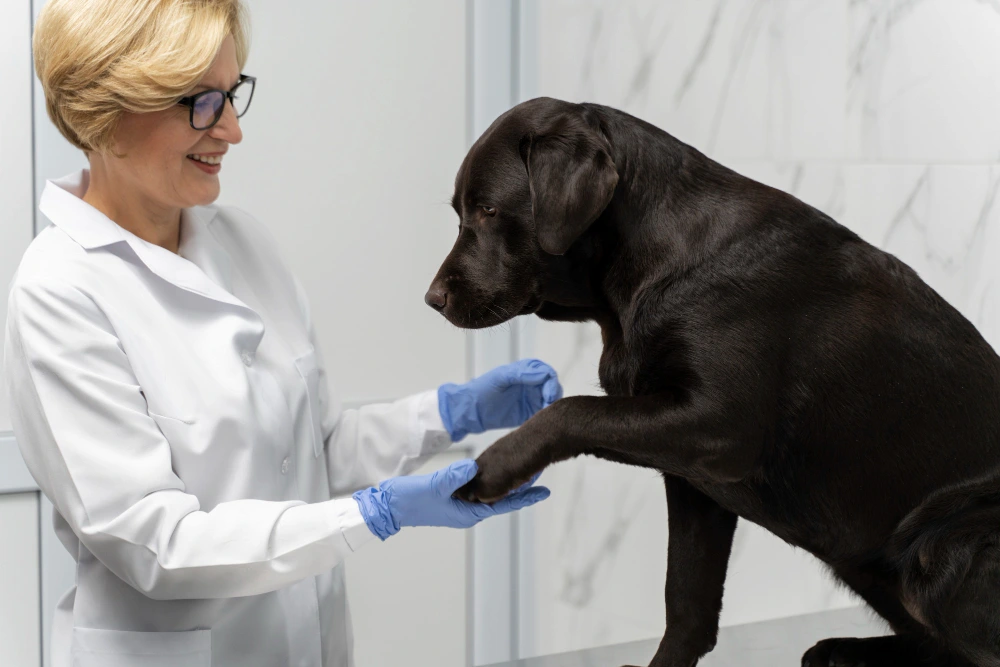
The first appointment starts with a conversation about your Lab’s history, activity level, any diagnoses they’ve received, and what changes you’ve noticed. Dr. Megan then evaluates posture and gait before doing a hands-on assessment of the spine to identify where restrictions and compensation patterns have developed.
Labs are generally easy and pleasant to work with in a clinical setting. They tend to be relaxed, friendly, and cooperative, which makes the evaluation and adjustment process smooth. Most Labs settle quickly and many seem to enjoy the attention. You’ll leave with home observation guidance and a recommended follow-up schedule based on what was found. Read about outcomes from dogs like yours on our testimonials page.
Serving Labrador Owners Across Charlotte, NC
Axiom Animal Chiropractic is located at 1726 E 7th St in Charlotte, NC. We see Labradors and dogs of all breeds from throughout the Charlotte metro area, including Huntersville, Mooresville, Concord, Matthews, Mint Hill, and surrounding communities. Whether your Lab is a young water dog, a hardworking field companion, or a beloved family member starting to slow down, we’d love to help them stay comfortable and active.
Book a consultation at charlotteanimalchiropractor.com/contact or call us at (704) 469-4772.