Agility and sport dogs put enormous physical demands on their bodies, and chiropractic care may help keep them moving well, recovering between events, and staying sound throughout their competitive careers. Changes like dropped bars, missed weave entries, or wide turns can be early signs of a physical restriction rather than a training problem.
At Axiom Animal Chiropractic in Charlotte, NC, Dr. Megan Hullihen works with sport dogs at all levels, from weekend fun run competitors to serious title contenders, helping them stay structurally sound in a discipline that asks a lot from the spine and joints.
Why Agility Is Hard on a Dog’s Body
Agility looks effortless when a well-trained dog runs a clean course. What is actually happening is a rapid, repetitive sequence of high-impact movements: sharp turns at speed, full-extension jumps, tight weave pole entries, sudden stops into contact obstacles, and explosive acceleration out of tunnels. Each of those movements places significant load on specific areas of the spine and musculoskeletal system.
Over time, and especially with high repetition in training and competition, that load accumulates. Vertebral subluxations can develop in response to the physical stress, and the muscles around restricted spinal segments tighten to compensate. The dog keeps working because the drive to perform is strong, but with a body that is working harder than it should.
That is when performance starts to slip in ways that are easy to misattribute. A dog that is dropping bars, missing weave entries, starting contacts early, or pulling wide on turns is not necessarily undertrained. They may be compensating for a physical restriction they cannot tell you about.
Signs a Sport Dog May Need Chiropractic Care
Agility handlers are often highly attuned to their dogs, so you may notice subtle changes before they become obvious problems. Here are some patterns worth paying attention to:
- Subtle changes in jumping style, such as a flatter arc or ticking rails more frequently
- Reluctance to drive through weave poles or early exits
- Asymmetry in how the dog turns or collects on left versus right handling
- Stiffness or soreness after training sessions that was not there before
- Changes in drive or enthusiasm that seem out of character
- Slower warm-up time before the dog is moving freely
- Visible muscle tension along the back, shoulders, or hind end
- Hesitation at specific obstacles, particularly those requiring full spinal extension or collection
Any one of these signs on its own might be nothing. Several of them together, or a pattern that has developed gradually over a training season, is worth having evaluated.
When to See Your Vet First
Some sport injuries need a veterinary diagnosis before chiropractic care. Agility dogs are prone to soft tissue injuries such as iliopsoas (groin) strains and cruciate ligament tears, which need proper diagnosis and rehabilitation. See your vet promptly if your dog:
- Suddenly will not bear weight on a leg, or only toe-touches
- Has swelling, heat, or pain in a joint
- Yelps during movement or when a specific area is touched
- Shows weakness, wobbling, or knuckling in the hind legs
Once your vet has a diagnosis and plan, chiropractic can support the return to sport. Our post on post-surgery recovery for dogs covers timing after procedures like cruciate repair.
What Chiropractic Does for a Performance Dog
Chiropractic care for sport dogs focuses on two things: correcting restrictions that already exist and maintaining structural health so new ones do not accumulate as quickly. These are not the same goal, but they are connected.
When Dr. Megan identifies and corrects a subluxation in an agility dog, the aim is to ease irritation of nearby nerves, reduce muscle tension around the restricted segment, and restore more normal range of motion in that part of the spine. For a dog who has been compensating around that restriction, the change may show up quickly on course. Movement can become more fluid, turns more balanced, and drive returns.
The maintenance side of chiropractic is about staying ahead of the physical demands of the sport. Regular care through the competition season may help a dog accumulate less restriction, recover more comfortably between events, and stay in the sport longer. Think of it the same way you would think about regular bodywork or conditioning for any high-performance athlete.
Chiropractic as Part of Your Sport Dog’s Health Team
Serious sport dog owners tend to invest in their dog’s health beyond basic veterinary care. Conditioning programs, sport-specific nutrition, physical therapy for injuries, and canine rehabilitation practitioners are all part of the picture for many competitors. Chiropractic fits naturally into that team, alongside good warm-up and cool-down routines before and after every run.
At Axiom Animal Chiropractic, we coordinate with your veterinarian and any other practitioners involved in your dog’s care. We ask for relevant health records before the first visit, and we give you clear feedback after every session on what we found and what the follow-up plan looks like.
If your dog is currently under veterinary care for an injury or condition, we will make sure our approach complements that care rather than working against it.
What to Expect at a Sport Dog Chiropractic Visit
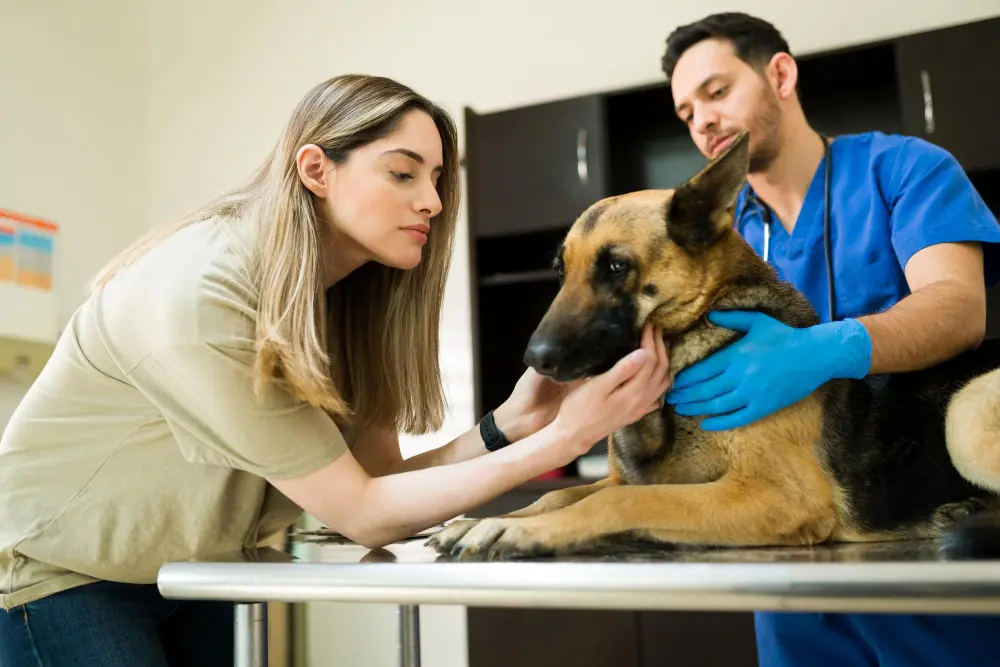
The first visit starts with a detailed conversation about your dog’s training schedule, competition history, any physical concerns you have noticed, and their daily routine. From there, Dr. Megan evaluates your dog’s posture, gait, and spinal mobility before beginning any adjustments.
For agility dogs, she pays particular attention to the thoracic and lumbar spine, the pelvis, and the neck, all areas that take significant repetitive stress in agility. She also looks at how the hind end tracks relative to the front end, since uneven tracking is a common early sign of spinal restriction in sport dogs.
Adjustments are precise and adapted to your dog’s size, current condition, and what the evaluation reveals. Most sport dogs tolerate adjustments very well and visibly relax during the session. You will leave with home observation guidance and a clear recommendation for follow-up timing based on your training and competition schedule.
When to Schedule Around Competition
This is a practical question we hear often from agility handlers. The general guidance is to avoid scheduling an adjustment within 24 to 48 hours before a competition, to give the body time to adapt to the changes. A few days before an event is typically ideal for a maintenance adjustment.
Post-competition visits are also valuable, especially after a heavy trial weekend, to address anything that developed under the demands of competition. If your dog has an acute restriction or a significant performance change, do not wait until after the next trial. Getting it evaluated sooner is almost always the better call.
Real Results in Performance Dogs
One case we think about often involved a show dog competing with a dead tail, also called limber tail, which is commonly linked to strain of the muscles at the base of the tail, with restrictions in the lower spine or tail region often involved. The dog received a chiropractic adjustment at the show, and within 90 minutes the tail was functional again. The dog went on to win their breed that day.
Not every case is that dramatic, and a limp tail that does not improve within a few days should be checked by your vet. Still, the pattern of a dog moving and performing better after spinal restrictions are addressed is one we see consistently. Read more on our testimonials page.
Serving Charlotte’s Sport Dog Community
Charlotte has an active and growing dog sport community, and Axiom Animal Chiropractic is proud to be a resource for the handlers and dogs who are part of it. Dr. Megan Hullihen is a Doctor of Chiropractic from Palmer College of Chiropractic, with specialized animal chiropractic training and a genuine interest in helping performance animals stay sound and competitive.
If your agility or sport dog is due for a structural check-in, or if you’ve noticed something that hasn’t quite been right on course, reach out at charlotteanimalchiropractor.com/contact or call us at (704) 469-4772.
Axiom Animal Chiropractic, led by Dr. Megan Hullihen, specializes in Gonstead-based animal chiropractic care for pets and performance animals throughout Charlotte, NC. Our precise, gentle adjustments restore spinal mobility and nervous system function, helping animals move comfortably without medications or surgery. From senior pets with arthritis to competition horses seeking peak performance, we create customized care plans addressing each animal’s unique needs.
Visit our main website to learn more about our approach and services. Schedule a consultation to discover how animal chiropractic can improve your pet’s quality of life.