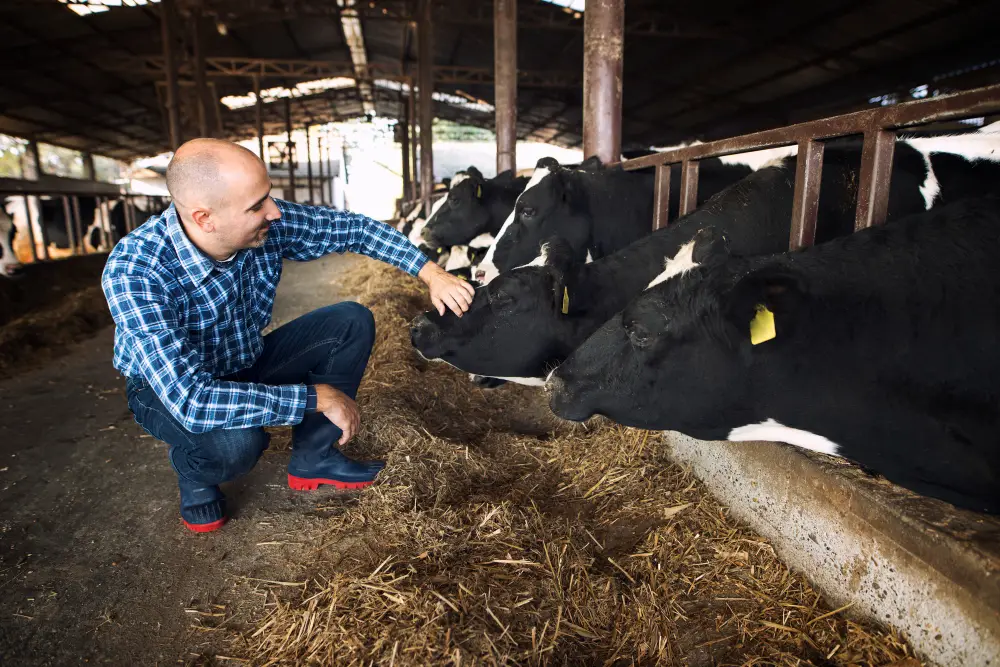
Cattle chiropractic care addresses spinal and joint restrictions in cows and steers that affect mobility, comfort, and recovery from the physical demands of farm life. It may help cows that are slow to recover after calving, move stiffly, or have lameness that has not fully resolved with standard treatment. It works alongside your farm veterinarian and hoof care, not in place of them.
It is a service most cattle owners in the Charlotte area have not considered, often because they did not know it was available or did not think it applied to their operation. At Axiom Animal Chiropractic, Dr. Megan Hullihen provides mobile chiropractic care for cattle throughout the greater Charlotte, NC area and surrounding Piedmont counties. She travels directly to your farm so your animals stay in a familiar, low-stress environment.
Why Cattle Develop Spinal Restrictions
Cattle are large, heavy animals that live demanding physical lives. They move across uneven terrain, rise and lie down repeatedly throughout each day, go through breeding and birthing cycles, and in production operations carry the ongoing physical burden of milk production or weight gain. All of that creates cumulative stress on the spine and joints over time.
Vertebral subluxations develop in cattle for many of the same reasons they develop in other species. Difficult calvings place significant mechanical stress on the lumbar and sacral spine of the cow, and that stress does not always resolve on its own after delivery. Slipping or falling on wet or uneven barn floors, collisions during handling or transport, and the general demands of farm life can all contribute to restrictions that affect how the animal moves, produces, and recovers.
Because cattle are prey animals with strong instincts to mask vulnerability, spinal problems in cows are often recognized only once they visibly affect gait or productivity. By that point, the restrictions have typically been building for a while. Sheep share this instinct, which we cover in our post on spotting pain and stiffness in sheep.
Signs a Cow May Need Chiropractic Care
Most cattle farmers are closely attuned to their herd, which means you are often the first to notice when something is not right. These signs may indicate a spinal restriction worth evaluating:
- Lameness or uneven gait that has not fully resolved with standard veterinary treatment
- Difficulty rising from a lying position or moving up and down slopes
- A hunched or roached back, or posture that looks different from the rest of the herd
- Muscle asymmetry or visible tension along the topline
- Unexplained drop in milk production in dairy cows without a clear nutritional or health cause
- Slower recovery after calving, particularly after a difficult delivery
- Behavioral changes during handling, such as increased agitation or difficulty moving through a chute
- A cow who is consistently slower or less willing to move with the herd
None of these signs automatically means a spinal problem is the primary cause. Your farm veterinarian should always be involved when new or concerning symptoms develop. When the standard workup does not produce a complete resolution, or when a cow treated for lameness has not returned to full function, spinal restrictions are worth adding to the list of possible causes.
When to Call Your Farm Vet First
Most lameness in cattle starts in the hoof, so foot problems such as sole ulcers, white line disease, and foot rot should be checked by your vet or hoof trimmer first. Call your veterinarian right away if a cow shows:
- Inability to stand, especially in the days around calving
- Hind legs splaying outward or weakness after a hard calving
- Fever, going off feed, or a sudden drop in milk with other signs of illness
- A hot, swollen joint or a foul-smelling foot
- Bloating, straining, or signs of a traumatic injury
A cow that goes down after calving may have milk fever or nerve damage from delivery, both of which need prompt veterinary treatment. For more on how the two roles fit together, read our post on animal chiropractic vs. veterinary care.
Calving and the Spine: What Cattle Farmers Should Know
Calving is one of the most physically demanding events a cow’s body goes through, and it places significant compressive and shear forces through the lumbar and sacral spine. Cows who have straightforward deliveries may recover well with minimal structural consequences. Cows who have prolonged labors, require assistance, or deliver very large calves are at higher risk for spinal restrictions that affect their recovery and ongoing function.
Post-calving chiropractic evaluation makes particular sense for cows who had difficult deliveries, are slow to return to normal activity, or show mobility or production changes in the weeks after delivery. Catching and correcting those restrictions early, before they become established compensation patterns, may lead to better outcomes than addressing them months later when the body has adapted around them.
For operations where cows calve regularly, adding a chiropractic evaluation to the post-calving routine can be a practical investment in herd productivity and animal welfare.
Chiropractic and Dairy Cow Productivity
The nervous system regulates more than movement. It coordinates organ function, hormonal signaling, and the physiological processes involved in milk production. When subluxations in the thoracic or lumbar spine create nerve interference in regions that supply the udder and reproductive organs, the effects may show up as reduced milk output or reproductive efficiency, even in cows who appear otherwise healthy and well-nourished.
This is a less obvious application of chiropractic care than addressing lameness, and published research in cattle is still limited. Correcting spinal restrictions does not guarantee a production improvement. Still, some dairy farmers find it worth exploring when production has dropped without a clear explanation, as part of a comprehensive herd health approach.
What an On-Farm Cattle Chiropractic Visit Looks Like
Dr. Megan travels to your farm throughout the Charlotte, NC area and surrounding counties, including Mecklenburg, Union, Cabarrus, Gaston, and Lincoln. For cattle, having a functional chute or secure handling pen set up makes the visit safer and more efficient for everyone involved. Dr. Megan will coordinate with you ahead of time on what is needed and how many animals you want evaluated.
The visit starts with a review of your herd’s health, the specific animals you are concerned about, and any relevant records or notes from your farm vet. Dr. Megan then does a movement assessment and hands-on spinal evaluation for each animal individually before making any adjustments. She works methodically and calmly, which helps keep stress levels manageable for the cattle and makes the evaluation more effective.
After the visit, you will receive clear feedback on what was found, what was adjusted, and what a follow-up plan might look like for your operation. We aim to give you practical, farm-specific recommendations that fit your management schedule rather than generic guidance. Learn more about livestock chiropractic care at Axiom Animal Chiropractic.
Chiropractic as Part of Your Herd Health Program
Cattle chiropractic works best as part of a broader herd health program that includes your farm veterinarian, hoof care, sound nutrition, and good management practices. It is not a replacement for any of those. It is a structural layer of care that most cattle never receive, and addressing it may help individual animals move, recover, and produce more comfortably.
For farms in the Piedmont region of North Carolina where cattle are a primary or significant part of the operation, adding periodic chiropractic evaluation to your herd health routine is a practical and accessible step. Learn more about Dr. Megan’s training and her approach to large animal care.
Frequently Asked Questions
Is chiropractic safe for cattle?
Yes, when performed by a trained practitioner with the animal properly restrained in a chute or pen. Adjustments are specific and controlled, and each cow is evaluated before any adjustment is made.
Does chiropractic care affect milk or meat withdrawal times?
No. Chiropractic care uses no drugs, so there are no withdrawal times for milk or meat.
How soon after calving can a cow be evaluated?
Once your vet has ruled out milk fever, calving injuries, and infection, an evaluation within the first few weeks after a difficult calving is often a good time to catch restrictions early.
How many visits does a cow usually need?
It varies by animal and problem. Some cows respond after one or two visits, while others with longer-standing issues benefit from a short series followed by periodic checks.
Serving Cattle Farmers Across the Charlotte Region
Axiom Animal Chiropractic serves cattle operations throughout Mecklenburg County and the greater Charlotte region, including Union, Cabarrus, Gaston, and Lincoln counties. If you have cows dealing with lameness, difficult recovery after calving, unexplained production changes, or mobility issues that have not fully responded to standard treatment, we’d be glad to come take a look.
Schedule a farm visit at charlotteanimalchiropractor.com/contact or call us at (704) 469-4772. We come to you.
Axiom Animal Chiropractic, led by Dr. Megan Hullihen, specializes in Gonstead-based animal chiropractic care for pets and performance animals throughout Charlotte, NC. Our precise, gentle adjustments restore spinal mobility and nervous system function, helping animals move comfortably without medications or surgery. From senior pets with arthritis to competition horses seeking peak performance, we create customized care plans addressing each animal’s unique needs.
Visit our main website to learn more about our approach and services. Schedule a consultation to discover how animal chiropractic can improve your pet’s quality of life.