
Golden Retrievers are prone to hip dysplasia, elbow dysplasia, and soft tissue injuries, and the way they compensate for those problems puts extra strain on the spine. Chiropractic care may help by easing the secondary spinal restrictions that build up around these conditions, helping Goldens move more comfortably alongside their veterinary care. Because Goldens tend to push through discomfort, proactive checks are especially valuable for this breed.
Goldens are among the most beloved and physically active dogs in Charlotte. Their enthusiasm for life, their working instincts, and the physical demands of being a family athlete all take a cumulative toll on the spine and joints over time. At Axiom Animal Chiropractic in Charlotte, NC, we work with Golden Retrievers regularly.
Why Golden Retrievers Are Prone to Structural Problems
Golden Retrievers were bred to retrieve game in demanding field conditions, so they are built for endurance, drive, and physical output. That same drive means they rarely slow down when something hurts. A Golden with a developing hip restriction or elbow problem will often keep playing, retrieving, and running until the issue becomes significant enough that an owner finally notices.
From a structural standpoint, Goldens are predisposed to several conditions with a strong spinal component. Hip dysplasia is prevalent in the breed. Elbow dysplasia is also common and creates compensation patterns through the neck and thoracic spine as the dog shifts weight away from sore front limbs. Soft tissue injuries from active lifestyles, including shoulder strains and cruciate tears, load the spine unevenly over time.
Those compensation patterns can create vertebral subluxations that compound whatever primary condition the dog is managing. Addressing the spinal piece does not fix the underlying orthopedic issue, but it may reduce the overall pain load the dog is carrying and help them function more comfortably within the reality of their diagnosis.
Common Issues in Golden Retrievers That Chiropractic Addresses
Hip Dysplasia Compensation
When a Golden favors an arthritic or dysplastic hip, the lumbar spine, sacrum, and opposite hind limb absorb load they were not designed to handle. Over months and years, this can produce subluxations throughout the lower back and pelvis that add a neurological layer to the mechanical problem in the hip. Chiropractic care aims to correct those secondary restrictions and reduce how hard the rest of the body is working to compensate.
Elbow Dysplasia and Front-End Compensation
Elbow dysplasia causes dogs to redistribute weight toward the rear end and away from painful front limbs. That shift stresses the thoracic and cervical spine and can create restrictions there over time. Dogs with elbow dysplasia often develop neck and mid-back tension that shows up as stiffness, reduced head and neck movement, and sometimes behavioral changes owners do not immediately connect to front-end pain.
Not sure which joint is the problem? Our post on hip vs. elbow dysplasia in dogs explains how to tell.
Post-Surgical Recovery
Goldens who have had orthopedic surgery, including TPLO for cruciate tears or procedures for elbow or hip conditions, often benefit from chiropractic care during recovery once their surgeon clears them. Surgery addresses the structural problem, but the spinal compensation patterns that developed before and during recovery do not automatically resolve. Working through those patterns may help the dog return to full function more completely. Our post on post-surgery recovery for dogs covers timing and what to expect.
Age-Related Spinal Decline
Senior Goldens face the same cumulative spinal changes as any large breed dog, often alongside the orthopedic conditions above. A 10-year-old Golden managing hip dysplasia and early arthritis is carrying a significant structural burden. Regular chiropractic maintenance helps keep the spine as functional as possible within that context and supports a better quality of life in the later years.
Signs Your Golden Retriever May Need a Chiropractic Evaluation
Goldens are famously stoic and people-pleasing, so they often mask discomfort well past the point where a less driven dog would slow down. Watch for these patterns:
- Stiffness getting up after rest, particularly in the morning
- A gradual shortening of the rear stride or a bunny-hopping gait in the back end
- Reluctance to jump into the car or onto furniture they used to access easily
- Sensitivity along the back, neck, or shoulders when touched or groomed
- Muscle loss along the topline or in the hind legs
- Front-end stiffness or a shortened stride on one foreleg
- Changes in enthusiasm for walks or play that have appeared gradually over time
- A dog who seems to take longer to warm up before moving freely
Any of these patterns is worth a veterinary evaluation and, once orthopedic conditions are assessed, a chiropractic consultation to understand the spinal picture.
When to See Your Vet First
Golden Retrievers have a higher-than-average cancer risk, and some bone cancers first show up as limping. Call your vet promptly if your Golden has:
- Limping that gets worse over a week or two instead of better
- A firm swelling on a leg or pain when a bone is touched
- Sudden weakness, collapse, or unusually pale gums
- Sudden inability to use the back legs, or loss of bladder or bowel control
Once serious causes are ruled out, chiropractic can become part of your Golden’s plan.
What a First Visit Looks Like for a Golden Retriever
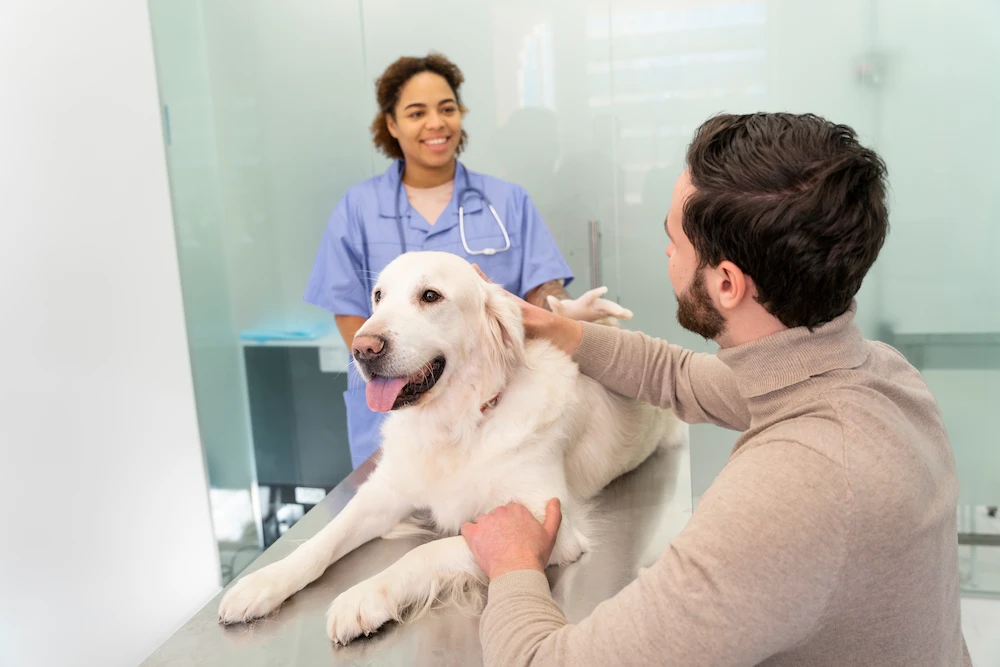
The first appointment starts with a thorough conversation about your dog’s history, any diagnoses they have received, their daily activity level, and the changes you have noticed. Dr. Megan reviews any veterinary records you bring and uses that information to guide her hands-on evaluation.
The evaluation involves observing your Golden’s posture and gait, then working through the spine systematically to identify restrictions and compensation patterns. Golden Retrievers are typically easy to work with in a clinical setting. They tend to be cooperative, curious, and relaxed with handling, which makes the process straightforward.
After the visit, you will receive specific home observation guidance and a recommended follow-up schedule. For Goldens managing active orthopedic conditions, an initial phase of more frequent visits is common before shifting to maintenance. Learn more about canine chiropractic care at Axiom Animal Chiropractic.
Proactive Care Makes a Real Difference in This Breed
Given what we know about Golden Retriever health, starting chiropractic care before obvious problems develop is a smarter approach than waiting for a diagnosis. A young Golden who receives periodic spinal evaluations during their active years may build up less accumulated restriction and enter their senior years in better structural condition. Keeping your Golden lean is one of the most helpful things you can do at home, since extra weight adds load to every joint.
We work with Goldens at every life stage, from active young dogs who need maintenance care during a demanding lifestyle to seniors managing multiple conditions who need consistent support to stay comfortable and mobile. Read about outcomes from dogs like yours on our testimonials page.
Frequently Asked Questions
At what age should a Golden Retriever start chiropractic care?
Many owners start once their Golden finishes growing, around one to two years old. An earlier check makes sense after a fall, a hard play injury, or if you notice uneven movement.
Can chiropractic replace surgery for hip or elbow dysplasia?
No. Chiropractic does not change the joint itself, but it may help manage the compensation patterns around it, whether or not your dog has surgery.
Serving Golden Retriever Owners Across Charlotte, NC
Axiom Animal Chiropractic is located at 1726 E 7th St in Charlotte, NC. We see Golden Retrievers and dogs of all breeds from throughout the Charlotte metro area, including Huntersville, Mooresville, Concord, Matthews, Mint Hill, Indian Trail, and surrounding communities. If your Golden has been showing signs of stiffness, compensation, or just hasn’t seemed quite right physically, we’d love to take a look.
Book a consultation at charlotteanimalchiropractor.com/contact or call us at (704) 469-4772.
Axiom Animal Chiropractic, led by Dr. Megan Hullihen, specializes in Gonstead-based animal chiropractic care for pets and performance animals throughout Charlotte, NC. Our precise, gentle adjustments restore spinal mobility and nervous system function, helping animals move comfortably without medications or surgery. From senior pets with arthritis to competition horses seeking peak performance, we create customized care plans addressing each animal’s unique needs.
Visit our main website to learn more about our approach and services. Schedule a consultation to discover how animal chiropractic can improve your pet’s quality of life.