

Goat chiropractic care focuses on spinal and joint restrictions that affect how a goat moves, rests, and recovers. It may help goats that are stiff, reluctant to climb or jump, uneven in their gait, or slow to bounce back after kidding, once your veterinarian has ruled out illness and hoof problems. It works alongside your vet and good herd management, not in place of them.
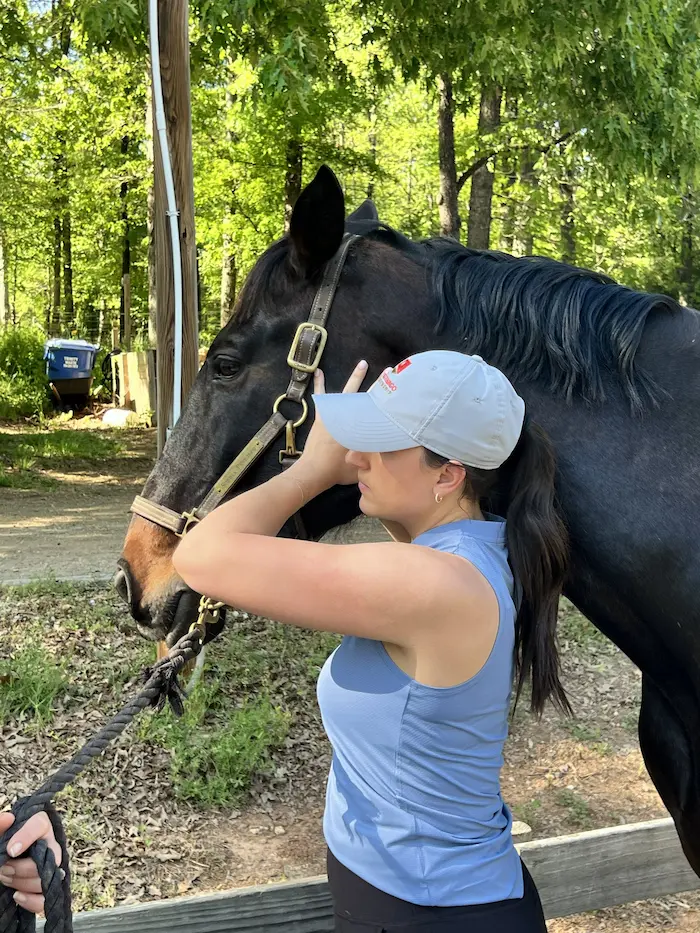
At Axiom Animal Chiropractic, Dr. Megan Hullihen provides mobile chiropractic care for goats throughout the Charlotte, NC region. She travels to your farm or homestead so your goats stay in a familiar setting with their herd, which keeps stress low for animals that do not travel well.
Why Goats Develop Spinal and Joint Restrictions
Goats are athletic, curious animals that put their bodies through a lot. They climb, jump on and off structures, rear up to browse, and push and headbutt one another to sort out herd rank. Each of those activities places force through the neck, back, and pelvis.
Pregnancy and kidding add another layer. Does often carry twins or triplets, and the weight of a full belly changes how they stand and move in late pregnancy. Dairy does also carry the ongoing load of a full udder through each lactation, and many spend time every day on a milking stand.
Other factors matter too. Overgrown hooves change how weight lands on each leg, which shifts stress up into the joints and spine. Slips on wet ground, rough handling, and getting caught in fencing can all create restrictions that change how a goat carries itself.
Like other prey animals, goats tend to hide pain until a problem is well established. Our post on spotting pain and stiffness in sheep covers this same instinct in another small ruminant.
Signs Your Goat May Benefit from Chiropractic Care
You know your herd best, and small changes in behavior are often the first clue. These signs may point to a spinal or joint restriction worth evaluating:
- Stiffness when getting up, especially in the morning or after lying down for a while
- Reluctance to climb, jump onto platforms, or step up onto the milking stand
- An uneven gait or shortened stride that is not explained by a hoof problem
- A hunched back or standing with the legs tucked under the body
- Sensitivity when you touch or brush along the back or hips
- Lying down more than usual or lagging behind the herd
- Slow recovery after kidding, particularly after a difficult delivery
- Changes in temperament, such as kicking on the stand or resisting handling
None of these signs alone confirms a spinal problem. They are a reason to have your goat checked, starting with your vet if the change is new or sudden.
When to Call Your Vet First
Several serious goat illnesses cause weakness, stiffness, or odd movement that can look like a back problem. Call your veterinarian promptly if a goat shows:
- Hind-end weakness, wobbling, or dragging the back legs, which can be caused by meningeal worm (deer worm), a parasite common where white-tailed deer live
- Swollen knees or other joints, a possible sign of caprine arthritis encephalitis (CAE)
- Star-gazing, circling, head pressing, blindness, or a drooping face or ear
- Going off feed, fever, or weakness in late pregnancy or right after kidding
- Limping with a hot, swollen, or foul-smelling foot
Several of these conditions are emergencies, and early treatment makes a real difference. For more on how our role fits with your vet’s, see our post on animal chiropractic vs. veterinary care.
Kidding and the Spine
Kidding places significant force through a doe’s pelvis and lower back. Does with a straightforward birth often recover well on their own. Does with long labors, assisted deliveries, large kids, or multiple kids are more likely to come out of kidding with restrictions in the lumbar spine and pelvis.
Those restrictions may show up as stiffness, an uneven walk, reluctance to get on the milking stand, or a doe that seems uncomfortable when her kids nurse. A chiropractic evaluation in the weeks after a hard kidding, once your vet has cleared her, may help catch those restrictions before they become long-term compensation patterns.
Considerations for Dairy, Meat, Show, and Pet Goats
Dairy goats. Daily milking routines, heavy udders, and long lactations create steady physical demand. A doe that suddenly resists the stand or shifts her weight while being milked may be uncomfortable. Because chiropractic care uses no medications, there are no milk withdrawal times to manage.
Meat goats. Larger, heavier breeds carry more weight through their joints and spine, especially breeding bucks and does carrying multiples. Keeping them comfortable and mobile supports their ability to graze, breed, and move with the herd.
Show goats. Show animals are judged on how they stand and move. Travel, trailering, and time in unfamiliar pens can leave a goat stiff, and a check before or after show season may help keep movement even.
Pet and pygmy goats. Many backyard goats around Charlotte live long lives as companions. As they age, arthritis and stiffness become more common, and gentle care may help keep older goats comfortable.
What an On-Farm Goat Chiropractic Visit Looks Like
Dr. Megan travels to farms and homesteads throughout the Charlotte, NC area and surrounding counties, including Mecklenburg, Union, Cabarrus, Gaston, and Lincoln. For goats, a milking stand, a small pen, or a helper to hold the goat steady usually works well. Dr. Megan will talk with you ahead of time about the setup and how many animals you want evaluated.
The visit starts with a review of each goat’s history, any recent kidding or injuries, and notes from your vet. Dr. Megan then watches the goat move before doing a hands-on evaluation of the spine, pelvis, and limbs. Adjustments are gentle and scaled to the goat’s size, so a Nigerian Dwarf and a large Boer buck receive very different contact.
Afterward, you will get clear feedback on what was found, what was adjusted, and whether a follow-up visit makes sense. Learn more about livestock chiropractic care at Axiom Animal Chiropractic, including our care for cattle on Charlotte-area farms.
Frequently Asked Questions
Is chiropractic safe for goats?
Yes, when performed by a trained practitioner after serious illness has been ruled out. Adjustments for goats are gentle and adapted to the animal’s size, age, and condition.
Can pregnant does receive chiropractic care?
Often yes, with adjustments modified for pregnancy. Let Dr. Megan know how far along your doe is and share any concerns from your vet before the visit.
How many visits does a goat usually need?
It depends on the goat and the problem. Some respond after one or two visits, while older goats or long-standing issues may benefit from a short series followed by periodic checks.
Serving Goat Owners Across the Charlotte Region
Axiom Animal Chiropractic serves goat owners throughout Mecklenburg County and the greater Charlotte region, from small homesteads to working dairy and meat herds. If your goats are dealing with stiffness, uneven movement, or a slow recovery after kidding, we would be glad to come take a look.
Schedule a farm visit at charlotteanimalchiropractor.com/contact or call us at (704) 469-4772. Learn more about Dr. Megan’s training and her approach to large animal care.
Axiom Animal Chiropractic, led by Dr. Megan Hullihen, specializes in Gonstead-based animal chiropractic care for pets and performance animals throughout Charlotte, NC. Our precise, gentle adjustments restore spinal mobility and nervous system function, helping animals move comfortably without medications or surgery. From senior pets with arthritis to competition horses seeking peak performance, we create customized care plans addressing each animal’s unique needs.
Visit our main website to learn more about our approach and services. Schedule a consultation to discover how animal chiropractic can improve your pet’s quality of life.