
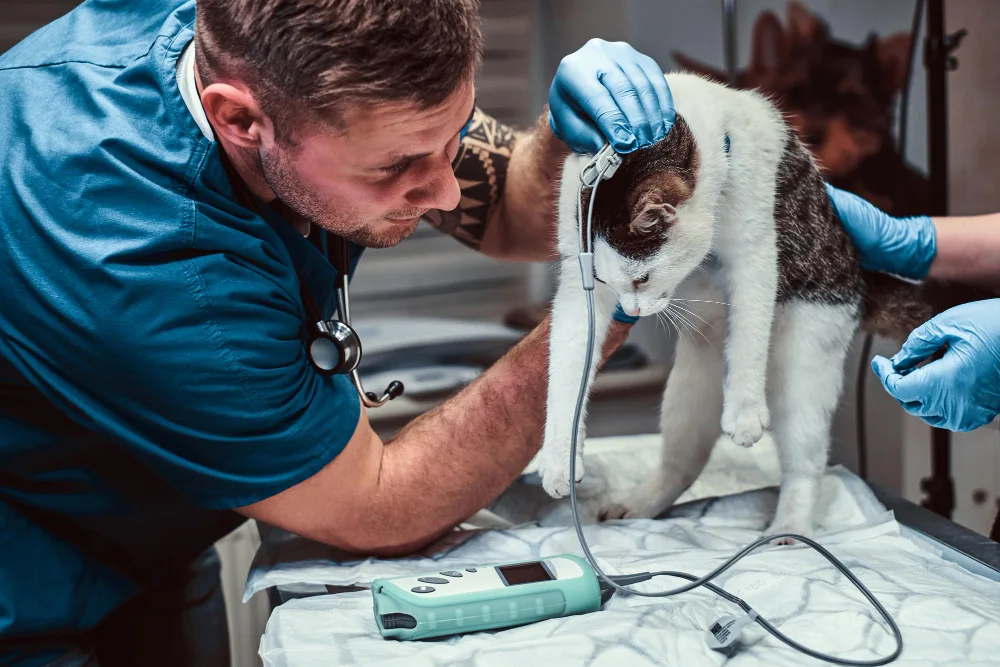
If your senior cat has been moving less, jumping less, or just seems quieter and less like themselves, chiropractic care may help restore comfort and mobility in ways you might not expect. Cats are masters at hiding pain, which means by the time you notice something is off, they’ve often been compensating for a while. At Axiom Animal Chiropractic in Charlotte, NC, we work with aging cats whose owners assumed decline was inevitable, and many of them find that their cat still had a lot of life left to give.
Why Senior Cats Lose Mobility
Just like dogs and people, cats experience wear and tear on their spines and joints as they age. Years of climbing, leaping, and the occasional tumble add up over time. Arthritis is extremely common in older cats, though it’s significantly underdiagnosed because cats simply don’t show pain the way dogs do. They go quiet. They stop jumping. They sleep more. Owners often chalk it up to personality or old age rather than recognizing it as discomfort.
Spinal subluxations, which are small misalignments in the vertebrae that disrupt nerve function, also accumulate over a cat’s lifetime. Cats who have had falls, injuries, or just a very active life tend to develop these restrictions in multiple areas of the spine. When subluxations go uncorrected, they interfere with the nervous system’s ability to coordinate movement and manage pain signals effectively.
The result is a cat that moves more stiffly, avoids activities that once came naturally, and seems older than they need to feel.
Signs Your Cat May Need Chiropractic Care
Because cats hide discomfort so well, you have to watch closely. Here are some signs that your senior cat may be dealing with spinal restrictions or joint pain that chiropractic care could help with:
- Reluctance or inability to jump onto furniture they used to reach easily
- Difficulty climbing stairs or using a cat tree
- Stiffness, especially after sleeping
- Changes in grooming habits, often grooming less because reaching is uncomfortable
- Weakness in the front or back legs
- A change in how they walk, stepping more carefully or unevenly
- Withdrawal from interaction, hiding more than usual
- Vocalizing when picked up or touched along the back
Any of these signs is worth discussing with your veterinarian. A proper exam helps rule out other conditions and gives you a clearer picture of what your cat is dealing with before adding chiropractic care to the plan.
What Chiropractic Care Can Do for an Aging Cat
Chiropractic adjustments for cats are precise, low-force, and adapted specifically to feline anatomy. A cat’s spine is not a smaller version of a dog’s spine. It has different proportions, different ranges of motion, and a different feel under the hands. Dr. Megan works with cats frequently and understands how to approach them in a way that respects both their anatomy and their temperament.
When subluxations are corrected, the nervous system can communicate more effectively throughout the body. Muscles that were compensating and holding tension begin to release. Joints that were restricted start to move more freely. Many cats show changes in comfort and mobility after just a few sessions, sometimes after just one.
The goal isn’t to make your 12-year-old cat act like a kitten again. It’s to make sure they’re as comfortable and functional as their body allows. That difference in quality of life, for both the cat and the owner watching them, is what makes this work matter.
A Story That Stays with Us
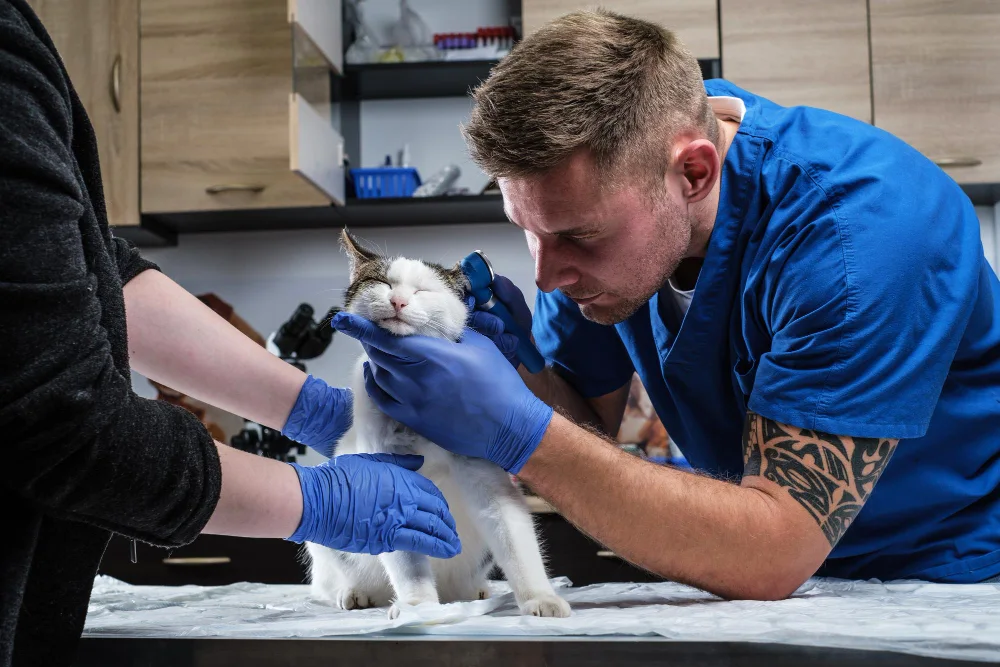
One of the cases we think about often involves Charlie, a 12-year-old cat whose owner wasn’t sure what else to try. Charlie had been losing strength in his back legs and was struggling with mobility that had been declining for a while. After beginning chiropractic care, Charlie regained strength in his back legs and was able to jump and climb again. His owner scheduled visits every four weeks to maintain that progress.
We’ve also worked with cats described as “years younger” by their owners after just a few adjustments. Those outcomes don’t happen for every cat in every situation, but they happen often enough that we always want to give a senior cat the chance to surprise you.
Read more about outcomes like Charlie’s on our testimonials page.
What to Expect During a Feline Chiropractic Visit
Cats have their own set of needs when it comes to a clinical environment. Our space in Charlotte is kept calm and low-stimulation, which helps cats who are already anxious about being away from home. We recommend bringing your cat in their usual carrier, as familiar smells help reduce stress during the visit.
Dr. Megan starts with a conversation about your cat’s daily routines, any changes you’ve noticed, and their health history. From there, she evaluates your cat’s posture, flexibility, and movement before making any adjustments. Everything is done at the cat’s pace. We never rush, and we read the cat’s comfort level throughout.
After the visit, you’ll get specific guidance on what to watch for at home and what a follow-up schedule might look like for your individual cat. Learn more about our approach to feline chiropractic care in Charlotte.
How Often Do Senior Cats Need Chiropractic Care?
It varies. Some cats do well with a visit every four to six weeks once they’ve reached a stable baseline. Others need more frequent care early on while we work through more significant restrictions. Dr. Megan will give you a recommended schedule after the first visit and adjust it over time based on how your cat responds.
The goal is always to find the frequency that keeps your cat comfortable and mobile without creating unnecessary visits. We’re interested in long-term relationships with the animals we see, not in filling a calendar.
Is Chiropractic Safe for Senior Cats?
When performed by a trained animal chiropractor who understands feline anatomy, chiropractic is a safe, gentle option for most senior cats. Dr. Megan Hullihen is a Doctor of Chiropractic from Palmer College of Chiropractic, one of the most respected chiropractic schools in the world, and has completed specialized animal chiropractic training. Every adjustment is adapted to what that individual cat can comfortably handle on that specific day.
Chiropractic care is not appropriate as a replacement for veterinary care. If your cat has an underlying condition driving their mobility issues, that needs to be diagnosed and managed by your vet. Chiropractic works best as a complementary piece of a broader care plan. Learn more about Dr. Megan’s training and background.
Serving Cat Owners Across the Charlotte Area
Axiom Animal Chiropractic is located at 1726 E 7th St in Charlotte, NC. We see cats from across Mecklenburg County and the greater Charlotte metro, including Dilworth, Plaza Midwood, SouthPark, Ballantyne, Pineville, and surrounding communities. If your senior cat has been slowing down and you want to explore what’s still possible, we’d love to help.
Book a consultation at charlotteanimalchiropractor.com/contact or call us at (704) 469-4772. Your cat may have more good years ahead than you think.