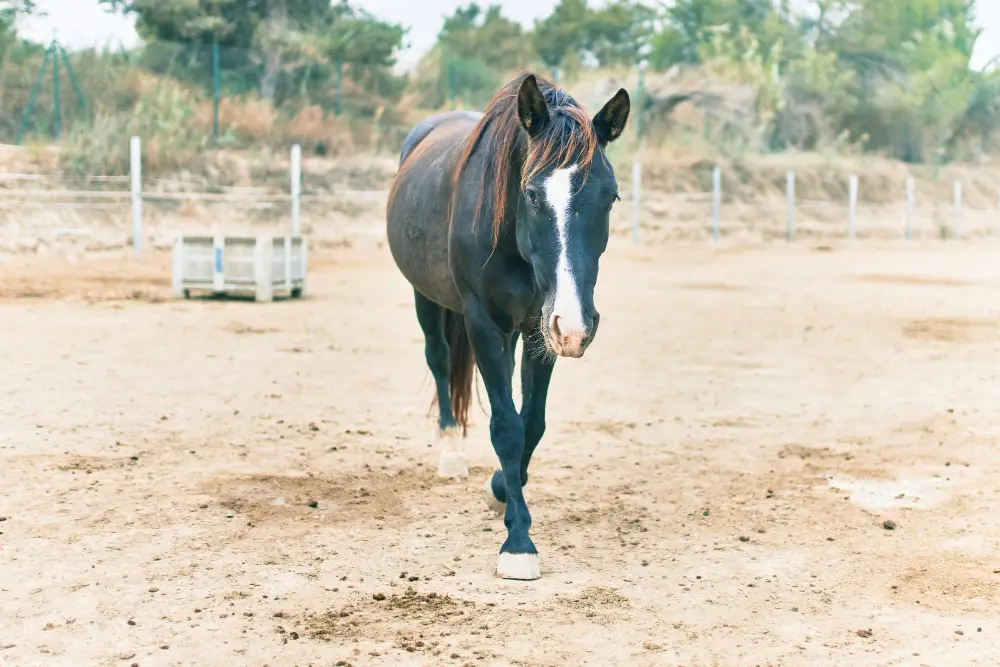
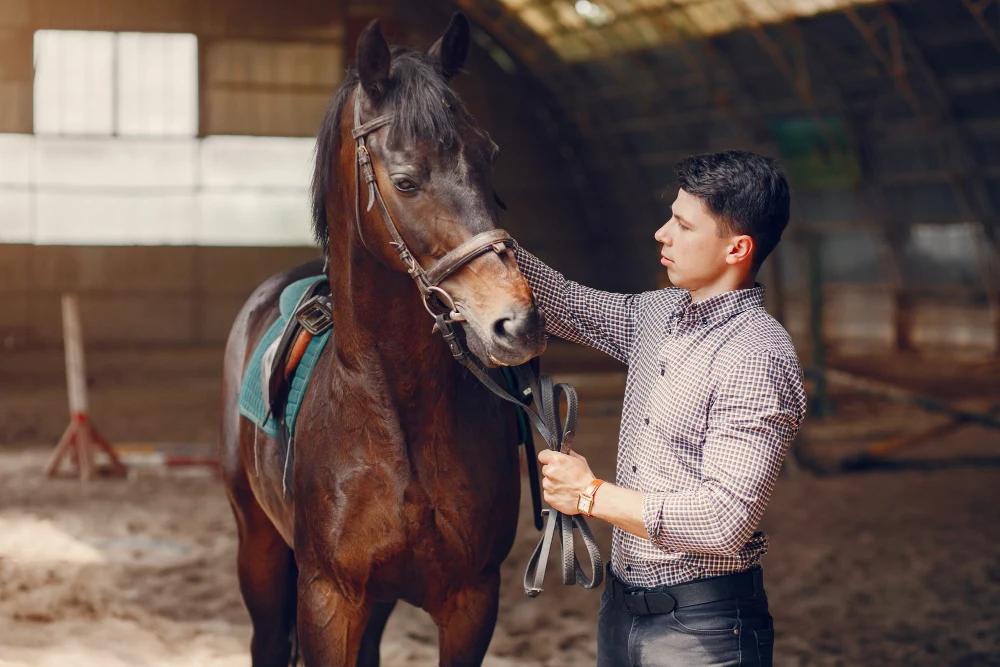
Equine chiropractic care addresses spinal and joint restrictions in horses that affect movement, performance, and comfort, and it may be one of the most overlooked tools available to horse owners in the Charlotte area. Whether your horse is a weekend trail companion, a competitive show horse, or a working farm animal, the health of their spine directly affects how they move, how they respond under saddle, and how well they recover from the demands of their work. At Axiom Animal Chiropractic, Dr. Megan Hullihen provides mobile equine chiropractic care throughout the greater Charlotte, NC area, traveling to your stable so your horse never has to leave home.
What Is Equine Chiropractic Care?
Equine chiropractic is a hands-on approach to identifying and correcting vertebral subluxations in horses. A subluxation happens when one or more vertebrae shift out of normal alignment and put pressure on the surrounding nerves and soft tissue. Since the nervous system controls muscle coordination, balance, and movement, even subtle subluxations can have a significant impact on how a horse performs and how they feel.
This isn’t the same as massage or general bodywork, though both have their place. Chiropractic adjustments are specific, targeted, and applied to individual vertebrae or joints to restore normal motion and nerve function. The goal is to correct the underlying restriction, not just relieve surface tension.
Equine chiropractic care is meant to work alongside your veterinarian and, for performance horses, alongside your trainer and farrier as well. It’s one piece of a broader care picture, and it works best when everyone involved in your horse’s health is communicating.
Signs Your Horse May Need Chiropractic Care
Horses are stoic animals, and they often compensate for discomfort in ways that aren’t immediately obvious. By the time a rider notices something is off, the horse may have been compensating for quite a while. Here are some of the signs that warrant a closer look:
- Resistance or behavioral changes under saddle that weren’t there before
- Gait asymmetry, uneven strides, or a shortened step on one side
- Difficulty bending, collecting, or performing lateral movements
- Sensitivity along the back or hindquarters when groomed or tacked up
- Muscle tension or asymmetry visible along the topline
- Reluctance to pick up or maintain a specific lead
- Performance plateau that training adjustments haven’t resolved
- Head tossing, ear pinning, or other behavioral signals during work
Any of these patterns is worth investigating. Some of them have straightforward explanations, like saddle fit or dental issues. But spinal restrictions are a common and frequently overlooked contributor, and they’re often correctable once identified.
How Spinal Restrictions Affect Performance
A horse’s spine is engineered for power and flexibility, but it functions best when all the moving parts are aligned and communicating properly. When subluxations develop in the thoracic, lumbar, or sacral regions of the spine, the muscles along that area tighten in response, range of motion decreases, and the horse starts compensating to avoid the discomfort.
That compensation shows up in the saddle. A horse that’s short-striding on the left, resistant to a right lead, or tight through the back isn’t necessarily being difficult. They may be working around a physical restriction they can’t explain to you. Identifying and addressing those restrictions through chiropractic adjustments can change the picture quickly, sometimes within a single session.
For competitive horses, this matters a lot. A subtle restriction in the lumbar spine can affect impulsion. Tension through the thoracic region can restrict the swing through the shoulder. These aren’t small things when you’re working at a high level of precision.
Saddle Fit and Chiropractic: A Connection Worth Understanding
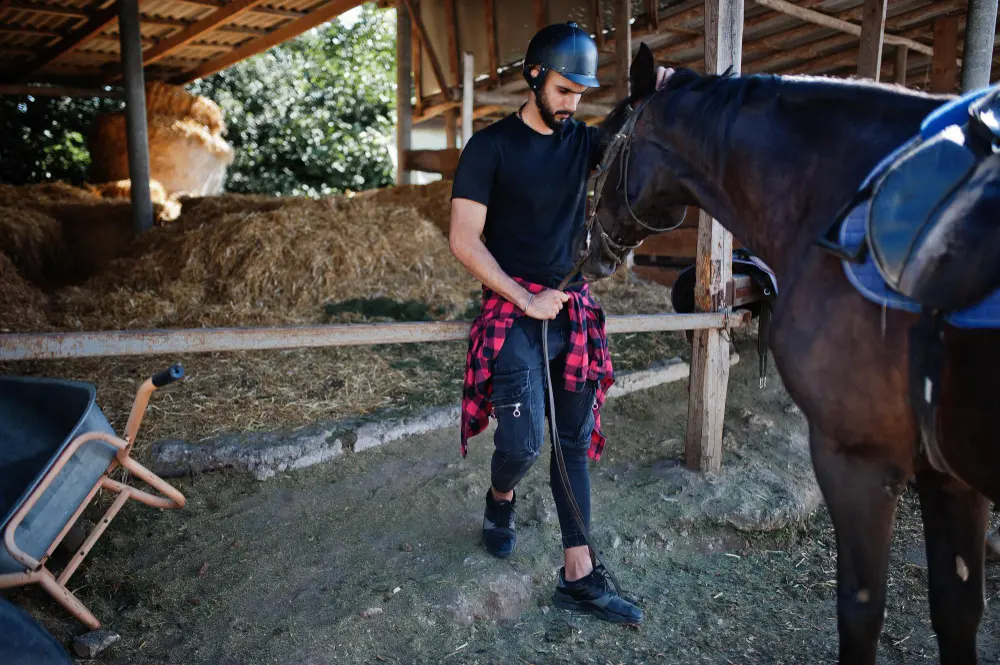
One of the things Dr. Megan evaluates at equine appointments is whether saddle fit may be contributing to the horse’s spinal issues. An ill-fitting saddle can create pressure points along the back that lead to muscle guarding, spinal restriction, and behavioral resistance over time. This is more common than most riders realize, and it’s often a factor that gets missed when a horse’s performance problem is attributed entirely to training or temperament.
We don’t fit saddles, but we do flag concerns and often recommend that clients consult a certified saddle fitter when we see patterns consistent with saddle-related issues. Getting the saddle right and addressing the spinal restrictions that developed because of the old fit is a combination that can produce dramatic results.
What to Expect During an Equine Chiropractic Appointment
Because horses can’t come to our clinic, Dr. Megan comes to you. She travels to stables, farms, and private properties throughout the Charlotte metro area, including Mecklenburg, Cabarrus, Union, Gaston, and surrounding counties. All you need is a clean, safe space to work with your horse and adequate lighting.
The appointment begins with a detailed consultation covering your horse’s training schedule, work history, any recent changes in behavior or performance, and what your veterinarian has noted on recent exams. From there, Dr. Megan conducts a comprehensive movement assessment and hands-on spinal evaluation before beginning any adjustments.
Adjustments for horses use controlled, specific pressure applied by hand to targeted vertebrae and joints. The force required is adapted to the horse’s size and the specific area being adjusted. Horses typically respond well and often show visible relaxation during and after sessions. Many stand quietly and even lower their head as the nervous system settles.
After the appointment, you’ll receive feedback on what was found and recommendations for follow-up care and home management. Learn more about our equine chiropractic services in Charlotte.
Who Should Consider Equine Chiropractic?
The short answer is: most horses would benefit from periodic chiropractic evaluation, not just those with obvious problems. The physical demands of carrying a rider, competing, trail riding, or working on a farm all create cumulative stress on the spine over time. Regular chiropractic care helps manage that stress before it turns into a performance issue or a soundness problem.
That said, specific situations where chiropractic is especially worth considering include:
- Performance horses preparing for or recovering from competition
- Horses showing unexplained behavioral changes under saddle
- Horses recovering from injury or a period of stall rest
- Horses with known back pain or gait asymmetry
- Horses coming back into work after time off
- Senior horses dealing with the effects of age on the spine and joints
A Performance Story Worth Sharing
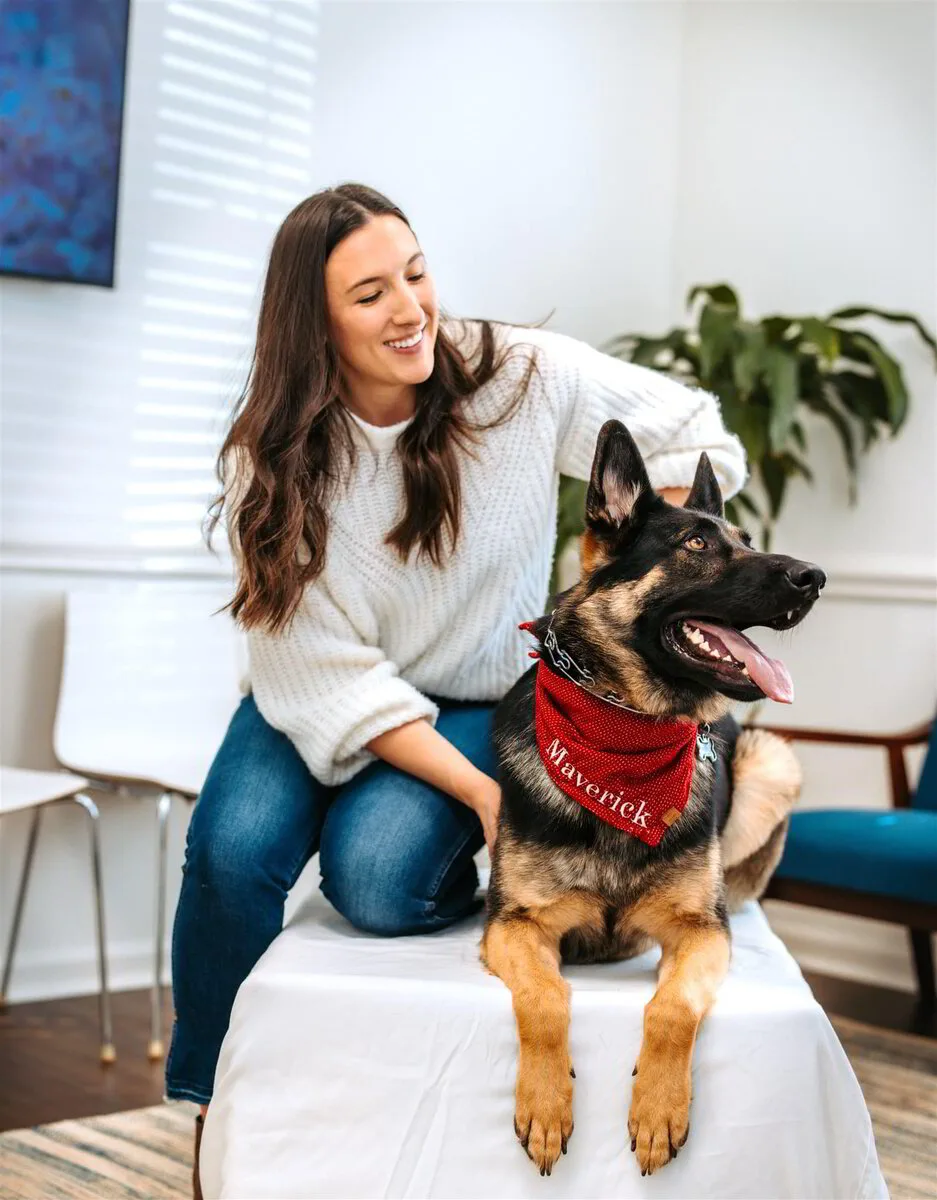
One of the cases that has stayed with us involved a show dog, not a horse, but the principle applies across species. A dog was showing with a dead tail, a condition caused by spinal restriction, and received an emergency chiropractic adjustment at the show. Within 90 minutes, the tail was functional again, and the dog went on to win their breed that day. The speed and specificity of that result is what chiropractic can do when a restriction is identified and corrected properly. We see similar patterns in performance horses regularly.
Serving the Charlotte Equestrian Community
The Charlotte area has a vibrant equestrian community, from trail riders exploring the Piedmont to competitive riders showing across the Southeast. Axiom Animal Chiropractic is proud to serve that community with mobile equine chiropractic care that comes to you, wherever your horse lives.
Dr. Megan Hullihen is a Doctor of Chiropractic from Palmer College of Chiropractic and has completed specialized animal chiropractic training. She brings the same depth of neurological and biomechanical knowledge that she applies to canine and feline patients to every equine appointment. Learn more about Dr. Megan’s background.
If you’re ready to schedule an equine chiropractic evaluation, reach out at charlotteanimalchiropractor.com/contact or call us at (704) 469-4772. We’d love to be part of your horse’s care team.