An ill-fitting saddle is one of the most common and most overlooked causes of back pain and spinal restriction in horses, and chiropractic care plays a meaningful role in both identifying the damage a poor fit causes and correcting the restrictions that develop because of it. At Axiom Animal Chiropractic in Charlotte, NC, saddle fit is something Dr. Megan evaluates at every equine appointment, because the connection between tack and spinal health is too significant to ignore. If your horse has been resistant under saddle, showing behavioral changes, or struggling with performance that training hasn’t resolved, the saddle may be part of the story.
How a Poor-Fitting Saddle Damages the Horse’s Back
A saddle that doesn’t fit correctly creates uneven pressure distribution across the horse’s back. Instead of the rider’s weight being spread evenly through a well-fitted panel, a poor fit concentrates pressure on specific points along the trapezius, longissimus, and other muscles of the back. Over time, that concentrated pressure causes muscle guarding, atrophy, and pain.
The horse responds to this discomfort by bracing. The back muscles tighten protectively, which limits the natural swing and elasticity through the topline. The horse shortens their stride to minimize the movement that hurts. They may hollow their back, drop away from the contact, or show resistance to work they used to do willingly. What looks like a training problem or a behavioral issue is often a horse communicating that something physical is wrong.
The spinal vertebrae are directly affected as well. When the muscles around a segment of the spine are chronically contracted, they pull the vertebrae out of their normal alignment and create subluxations. Those subluxations add a neurological layer to the problem, disrupting nerve flow and compounding the pain and dysfunction the horse is already experiencing from the muscular damage.
Signs Your Horse’s Back Pain May Be Saddle-Related
Some of these signs overlap with other causes of back pain, which is why a thorough evaluation matters. But these patterns in particular often point to saddle fit as a contributing factor:
- Sensitivity or flinching when the saddle is placed on the back or the girth is tightened
- Pinned ears, head tossing, or other behavioral resistance at tacking up time
- Cold-back behavior, bucking, or stiffness at the start of work that improves once warmed up
- White hairs appearing under the saddle area, which indicates chronic pressure point damage
- Visible muscle asymmetry or atrophy along the back, particularly just behind the shoulder
- Reluctance to go forward or reduced willingness to engage the hindquarters
- Difficulty collecting, bending laterally, or performing movements that require back engagement
- A horse who has been progressively worsening in attitude or performance with no clear veterinary diagnosis
Any of these signs warrants a careful look at saddle fit before assuming the cause is something else. Many horses have been labeled difficult, undertrained, or lazy when the real issue was a saddle that was causing consistent discomfort every time they worked.
The Relationship Between Saddle Fit and Spinal Subluxations
Here’s how the cycle typically develops. A poorly fitting saddle creates muscle pain and guarding. The horse compensates by moving differently to avoid aggravating the sore area. That compensation pattern puts stress on other areas of the spine that weren’t originally affected. Subluxations develop at multiple levels as the body tries to manage the problem. Over time, the restrictions become established and the horse’s movement patterns adapt around them.
By the time an owner or trainer notices that something is wrong, the horse may have been compensating for months. Changing the saddle at that point removes the ongoing source of damage, but it doesn’t correct the restrictions that have already developed. This is exactly where chiropractic care becomes essential. It addresses what the saddle fit problem left behind in the spine, not just the surface-level muscular soreness.
What Dr. Megan Evaluates at an Equine Chiropractic Appointment
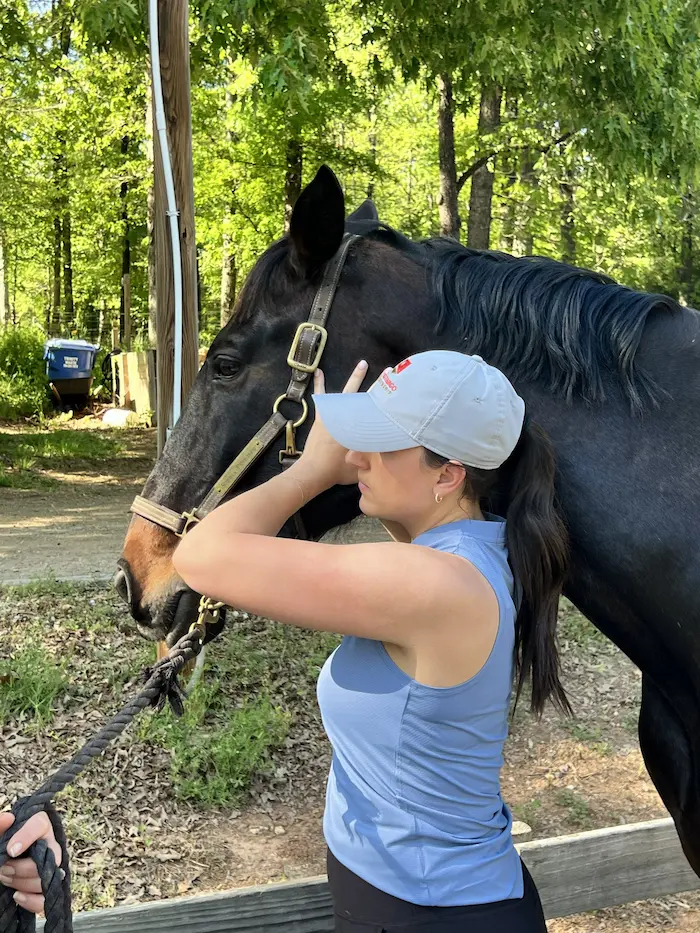
At every equine appointment, Dr. Megan includes a saddle fit assessment alongside her standard spinal evaluation. She looks at the fit of the saddle on the horse’s back, where pressure points are developing, whether the tree width is appropriate for the horse’s conformation, and whether the panels are making even contact along the full length of the back.
She also evaluates the horse’s movement and posture to identify the compensation patterns that have developed in response to saddle-related pain. The spinal evaluation then identifies which vertebral segments have been affected and where adjustments are needed.
It’s worth noting that Dr. Megan does not fit saddles professionally, and she’ll be clear about that. When she identifies a significant saddle fit issue, she recommends consultation with a certified saddle fitter as part of the broader plan. The most effective approach is to address the saddle problem and the spinal restrictions it caused at the same time, with the right specialists handling each piece.
Chiropractic as Part of a Saddle Fit Recovery Plan
Getting a better-fitting saddle is the right first step when saddle fit is the problem. But for many horses, simply switching saddles doesn’t produce the full improvement the owner was hoping for, because the underlying restrictions remain. The horse has been moving in a compensatory pattern for so long that the spine needs help getting back to normal function even after the cause is removed.
This is where chiropractic care fits naturally into the recovery plan. Once the saddle fit issue is being addressed, regular chiropractic adjustments work through the restrictions that accumulated, restore more normal spinal mechanics, and allow the horse’s movement to progressively improve. Many horses show meaningful changes in topline engagement, willingness to go forward, and lateral suppleness once the structural restrictions are corrected.
At Axiom Animal Chiropractic, we work as part of a collaborative team that includes your veterinarian, trainer, and farrier when applicable. Every equine case is different, and the best outcomes come from everyone involved communicating and working toward the same goal. Learn more about Dr. Megan’s approach to equine care.
What to Expect at a Mobile Equine Chiropractic Visit
Because horses can’t come to our clinic, Dr. Megan travels to your stable or facility throughout the Charlotte, NC area, including Mecklenburg, Cabarrus, Union, Gaston, and surrounding counties. All you need is a safe, well-lit space to work with your horse.
The visit begins with a detailed consultation covering your horse’s work history, any behavioral or performance changes you’ve noticed, and your current saddle setup. From there, Dr. Megan conducts a movement assessment, evaluates the saddle fit, and performs a comprehensive hands-on spinal evaluation before making any adjustments. You’ll leave with clear feedback on what was found, what was addressed, and what the recommended follow-up plan looks like.
Serving the Charlotte Equestrian Community
Charlotte’s equestrian community is active and growing, from competitive riders to trail enthusiasts and pleasure horse owners across the Piedmont region. Axiom Animal Chiropractic is proud to serve that community with mobile equine chiropractic care that comes to you, wherever your horse lives.
If your horse has been showing signs of back pain, saddle-related resistance, or performance changes that haven’t responded to training adjustments, reach out to schedule a mobile evaluation. Book online at charlotteanimalchiropractor.com/contact or call us at (704) 469-4772.